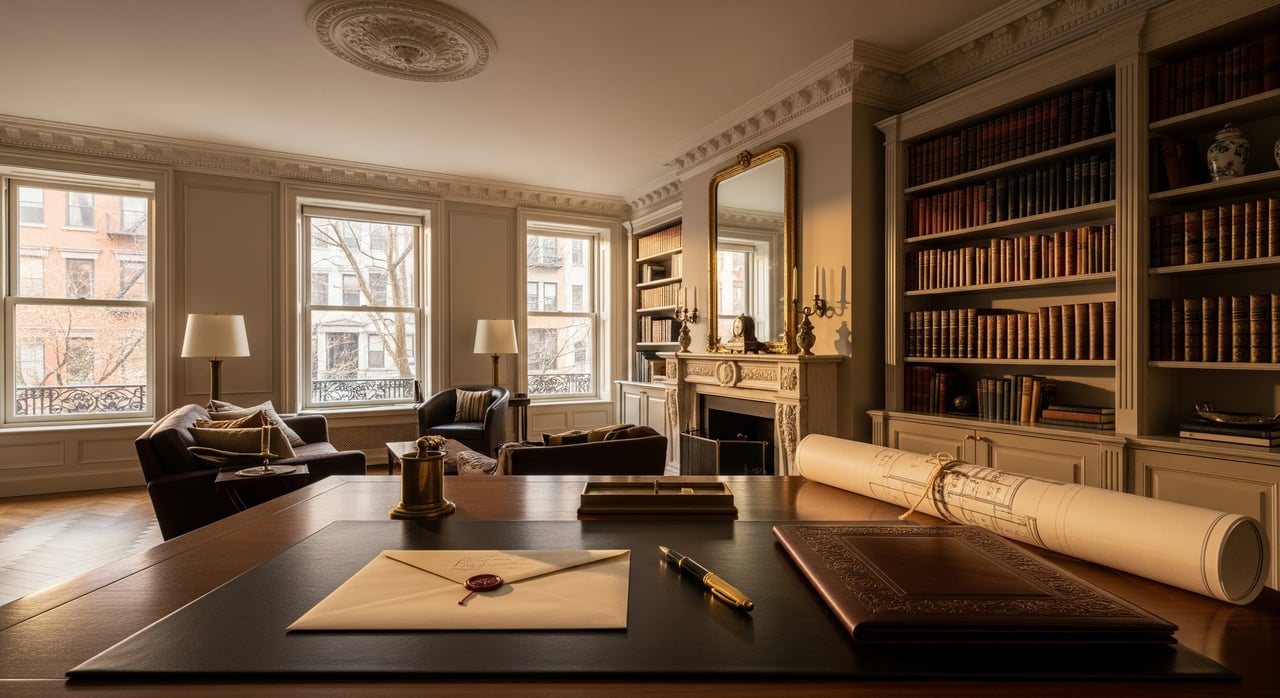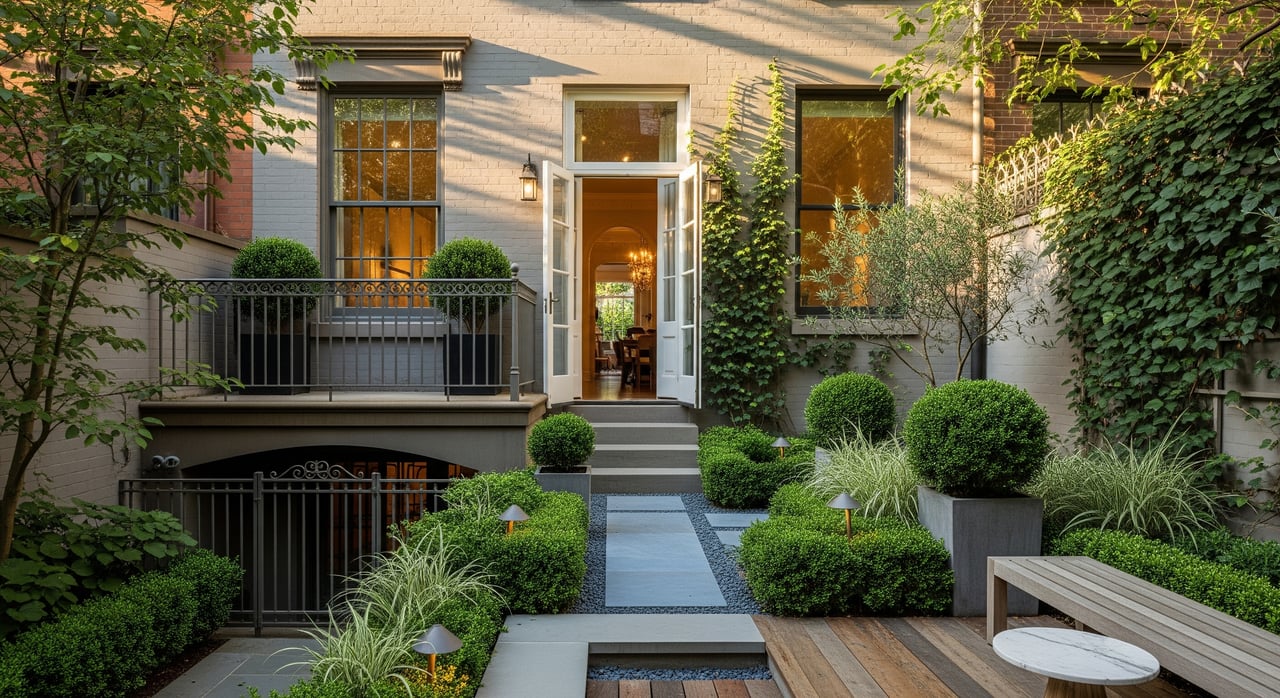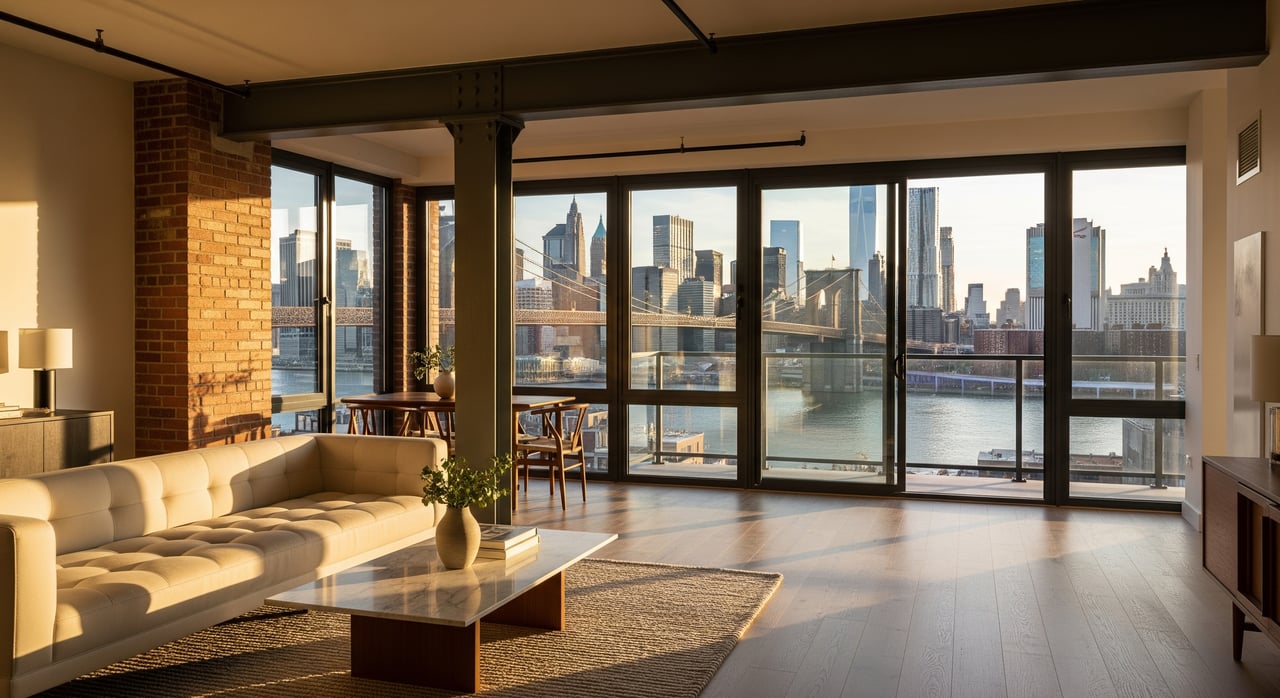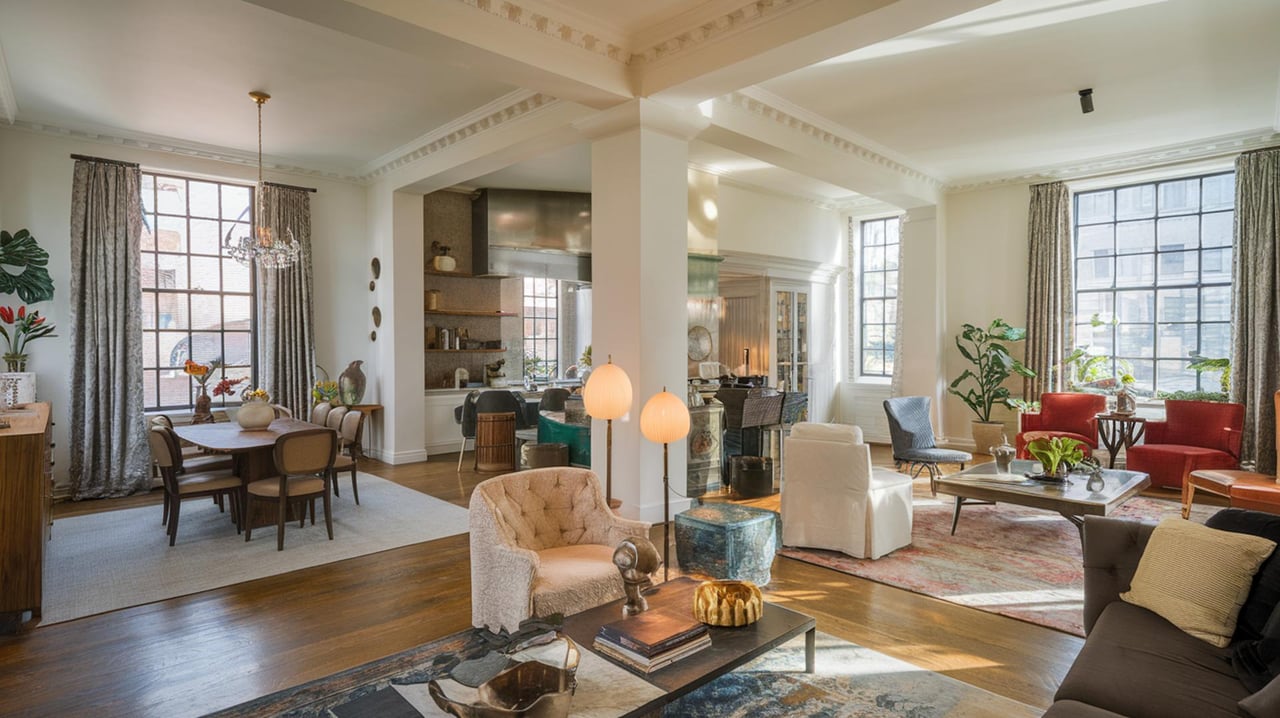
What does it really feel like to live in a townhouse on a historic Greenwich Village block? If you are drawn to old New York streets, architectural character, and a more intimate streetscape than much of Manhattan offers, Greenwich Village has a rare kind of appeal. The experience is about more than owning a beautiful home. It is about living within a preserved urban setting shaped by stoops, cornices, small parks, and block-by-block variety. Let’s dive in.
Why Greenwich Village feels distinct
Greenwich Village stands apart because its physical layout does not fully follow Manhattan’s regular grid. According to the Landmarks Preservation Commission’s overview of the Greenwich Village Historic District, the neighborhood is one of Manhattan’s oldest sections and remains home to New York City’s largest historic district, with more than 2,000 buildings across more than 65 blocks.
That scale matters when you are thinking about townhouse living. You are not looking at a single pretty street preserved in isolation. You are stepping into a broad historic setting where the irregular street pattern, diagonal blocks, and lower-rise buildings create a more intimate rhythm than the surrounding city. The result is a neighborhood that often feels quieter, more layered, and more residential from one block to the next.
Townhouse life at street level
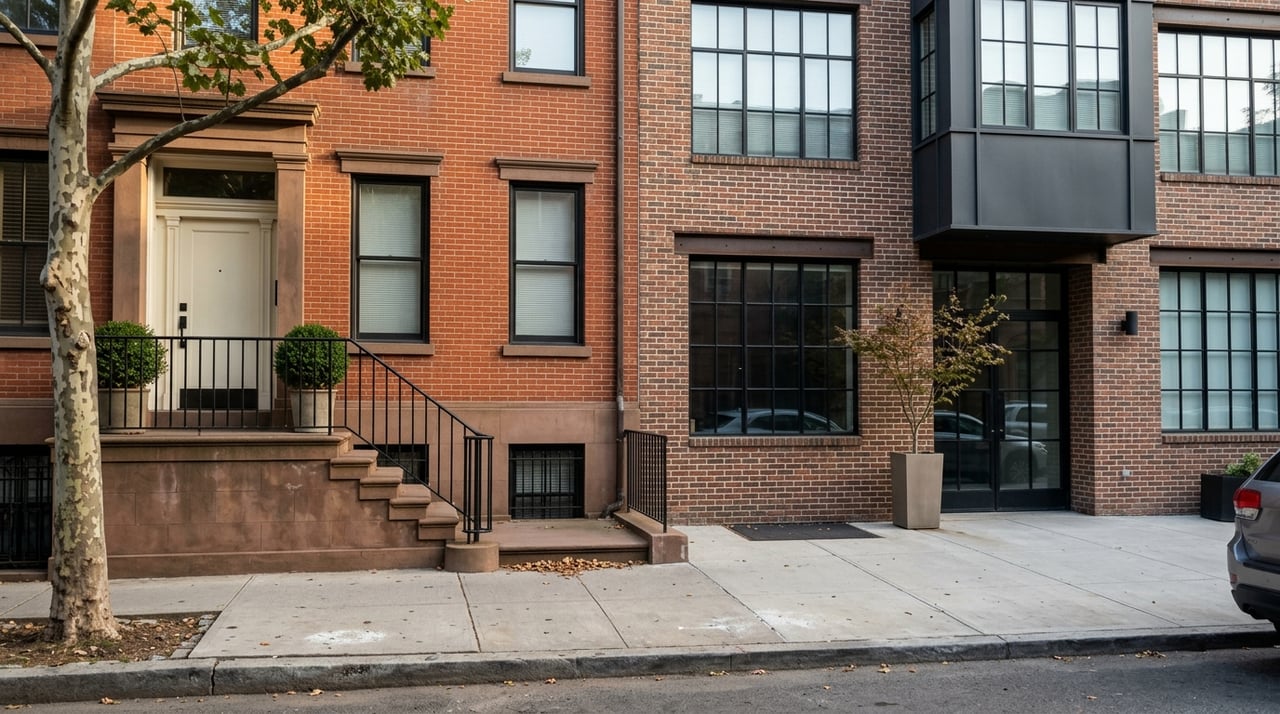
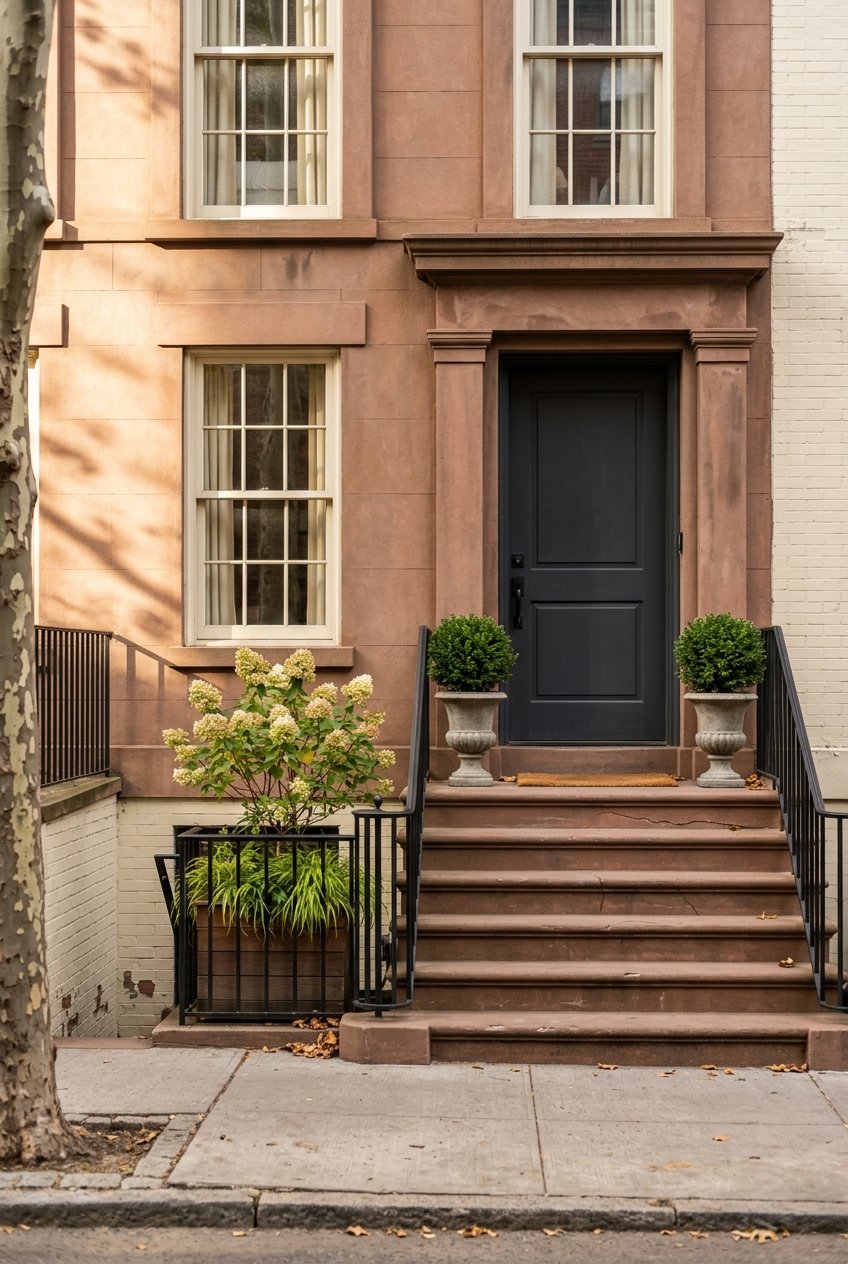
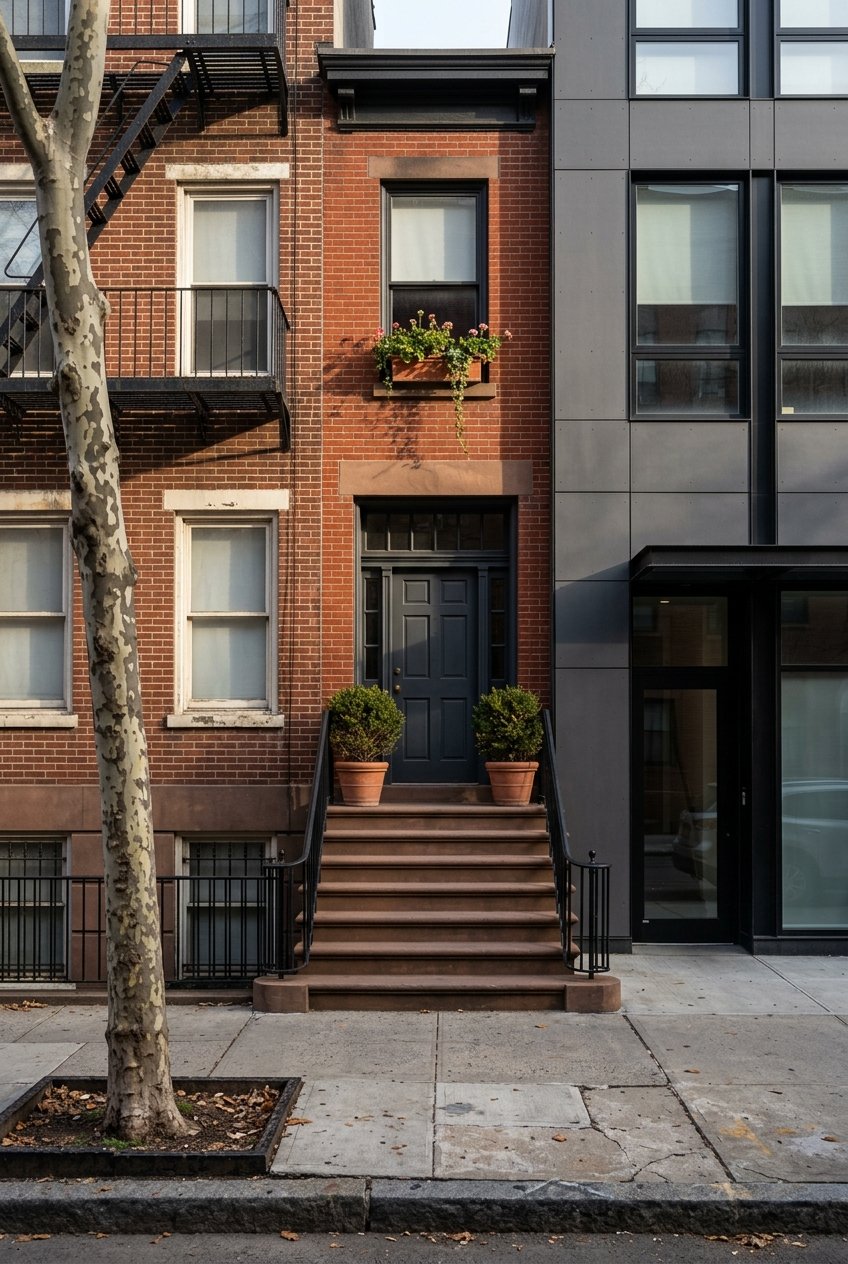
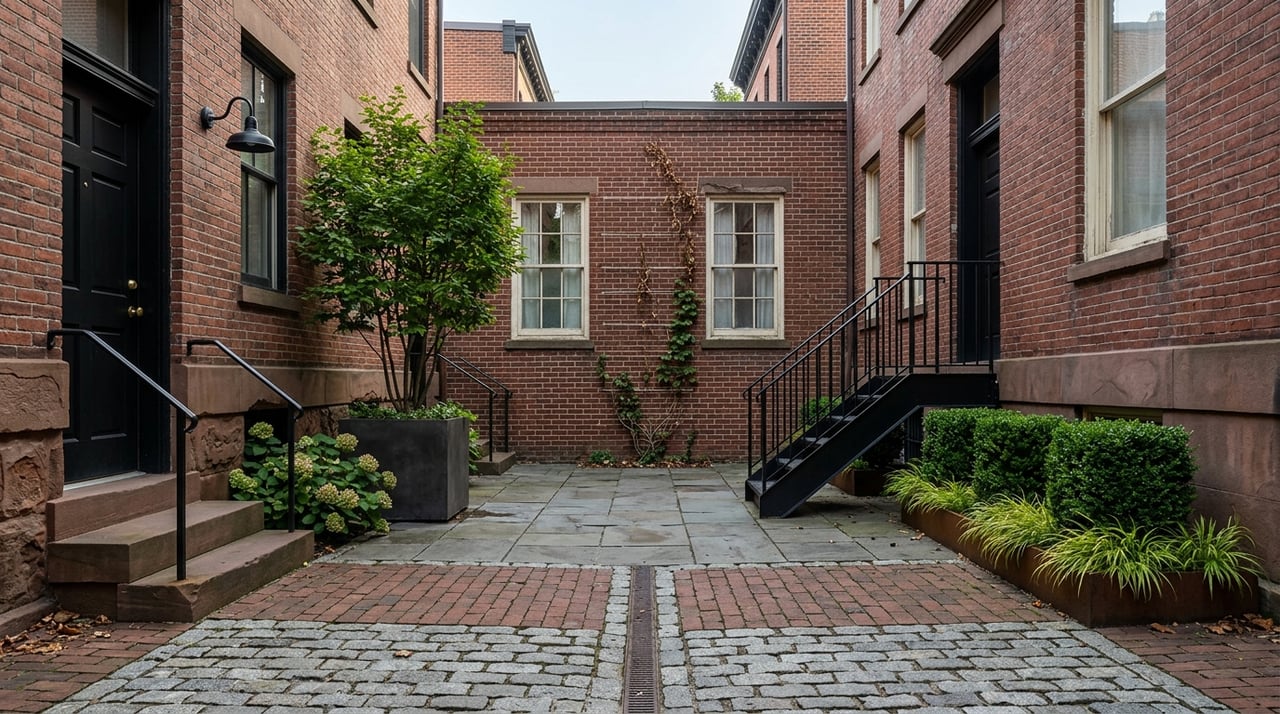
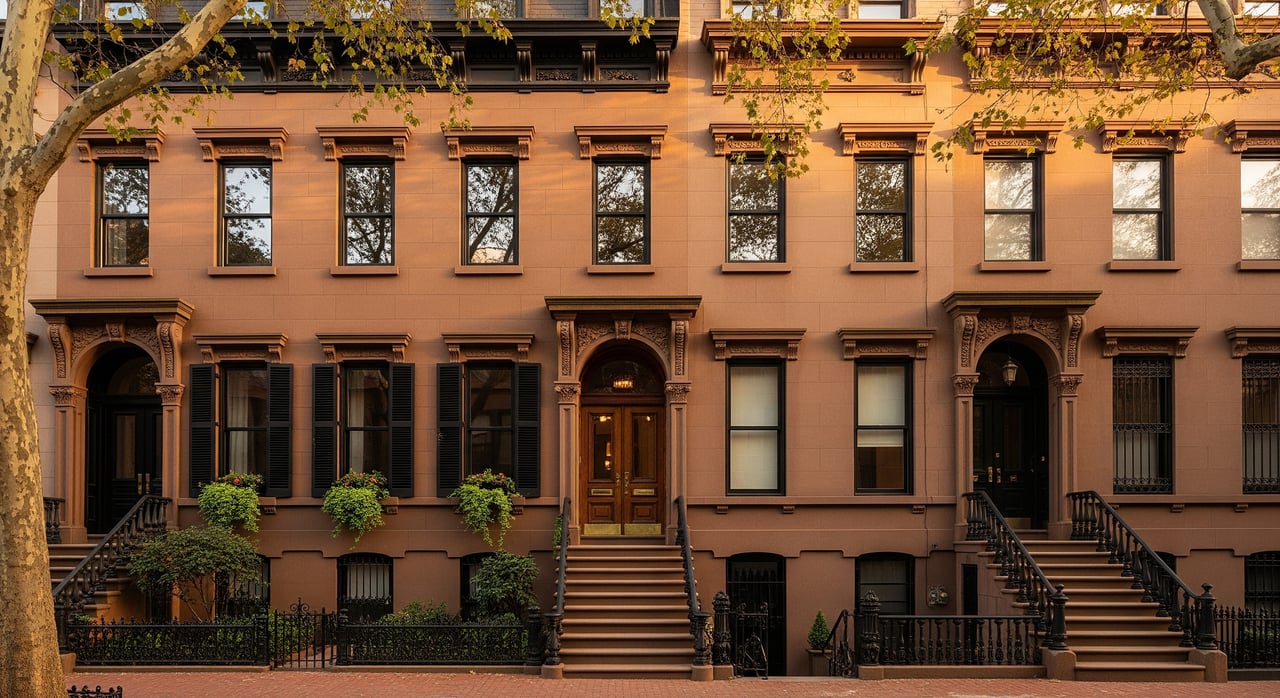
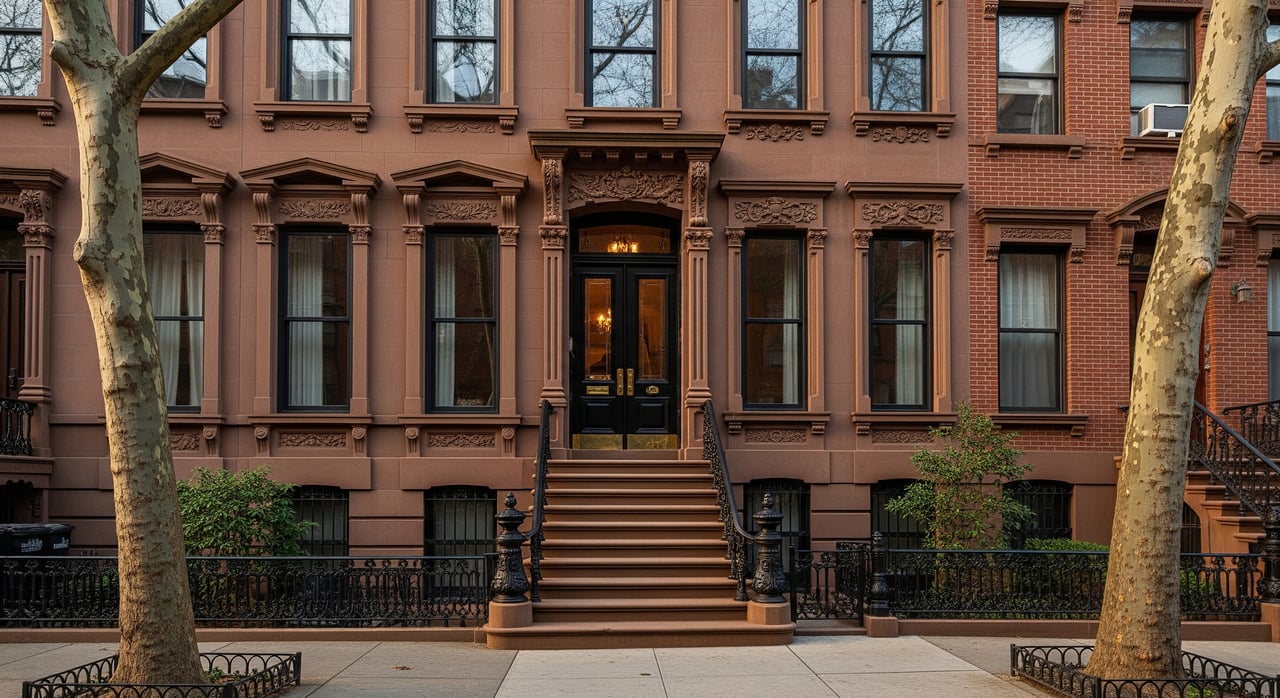
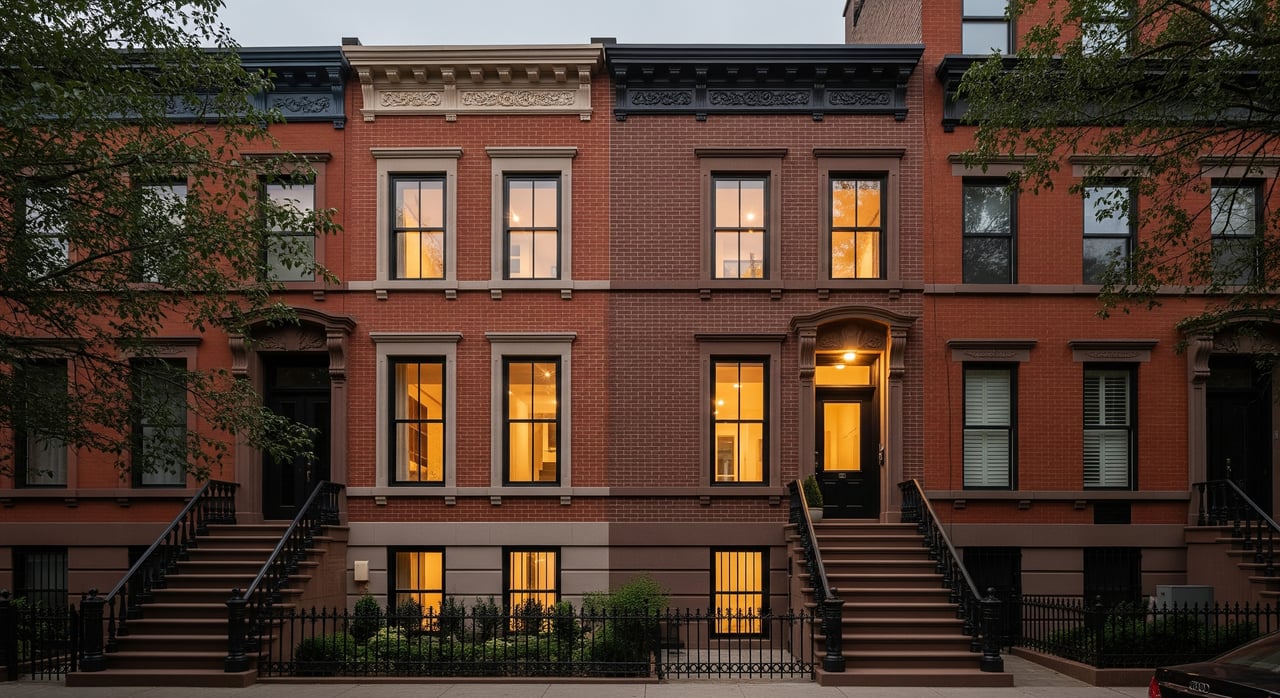
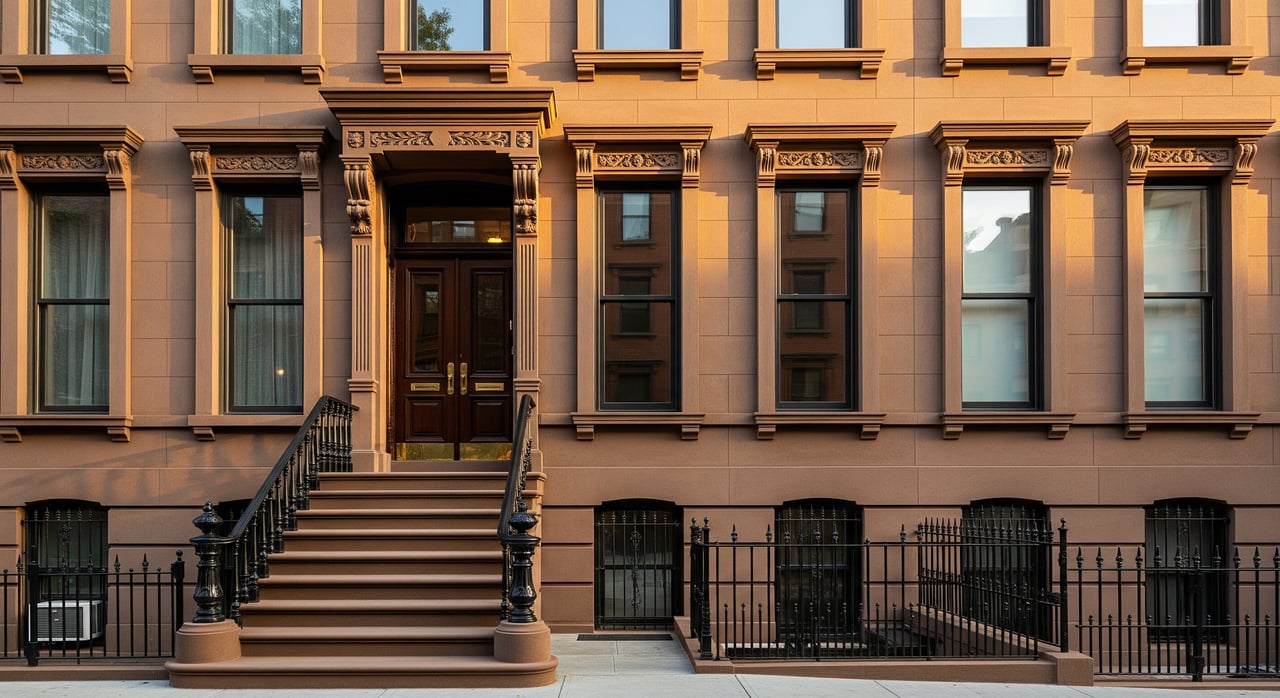
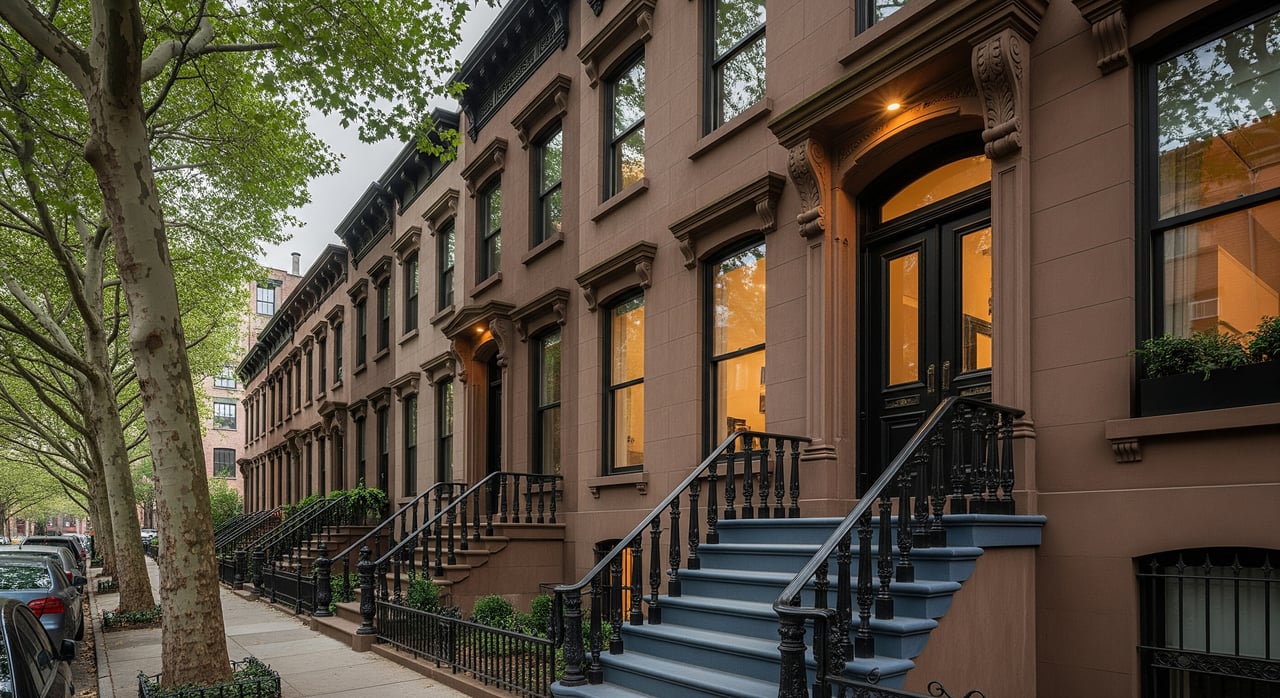
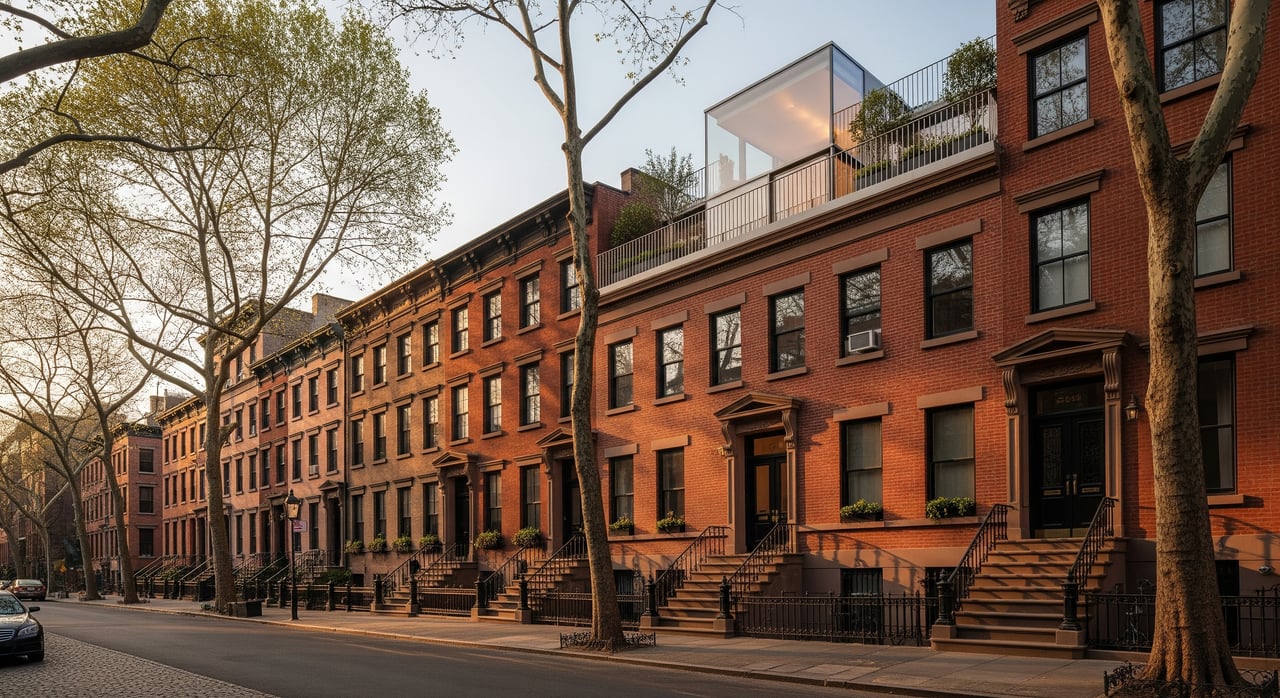
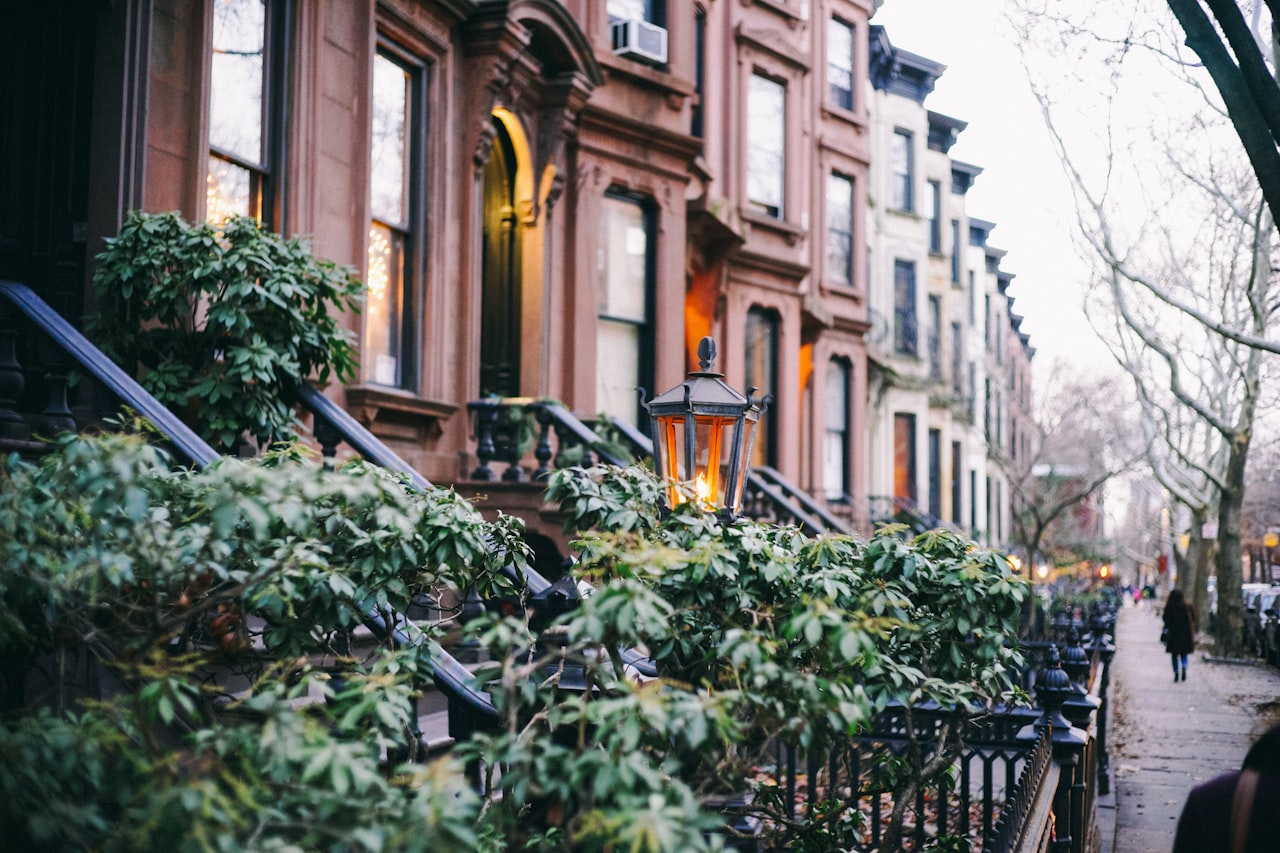
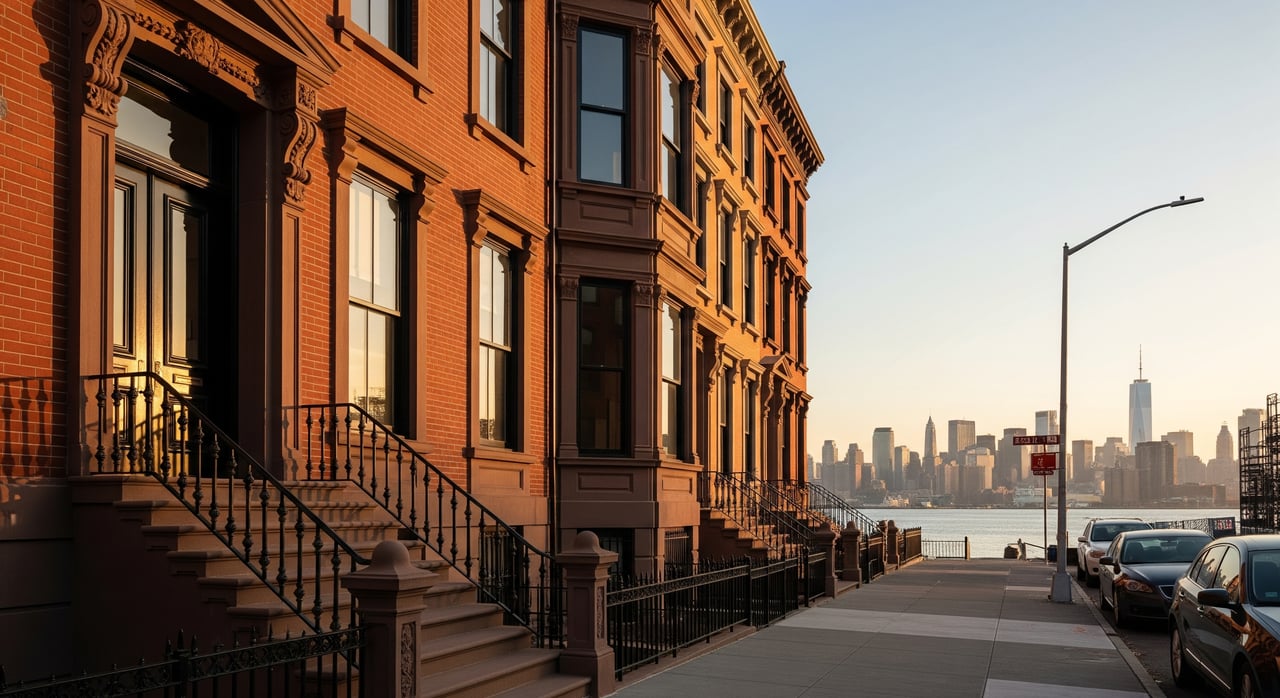
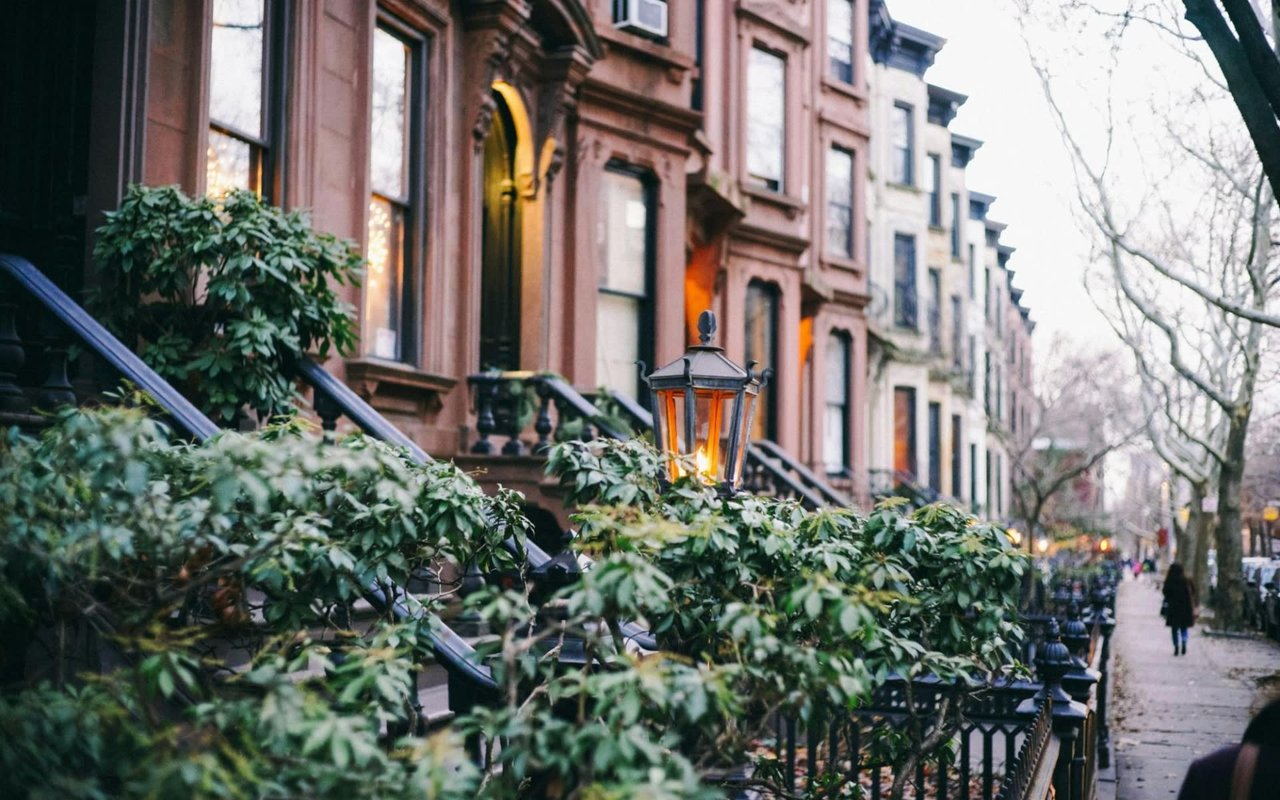
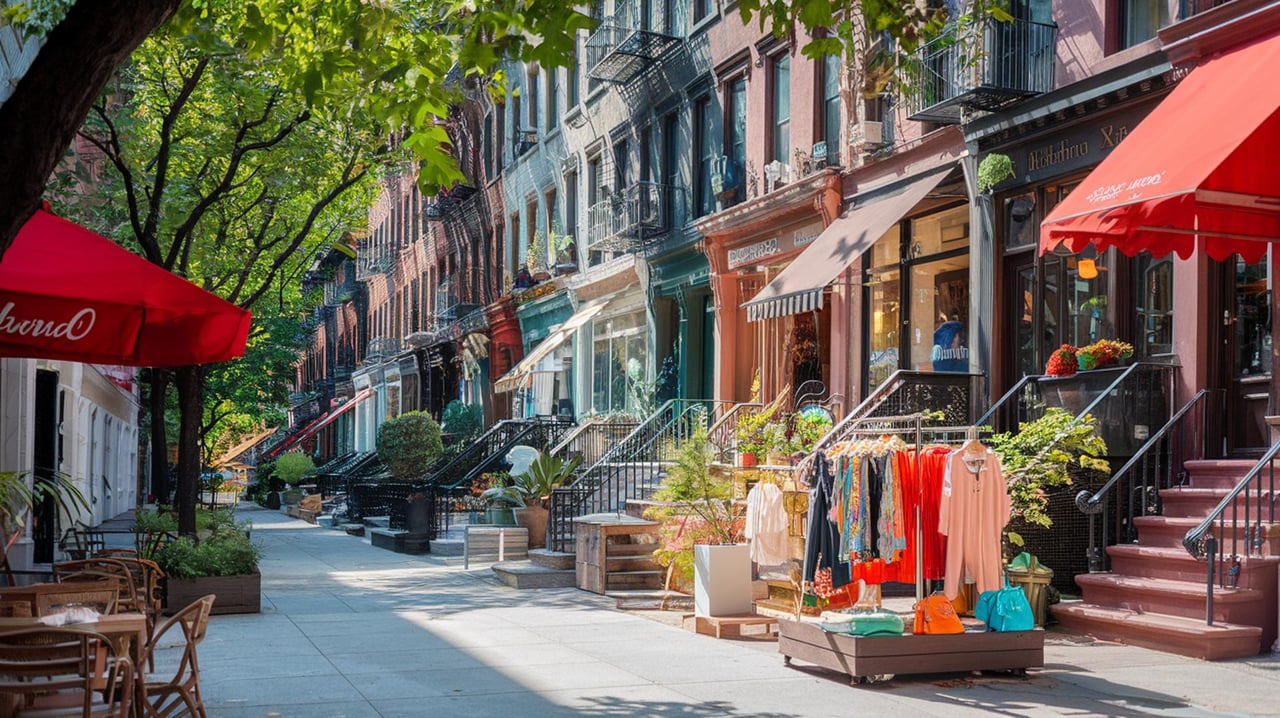
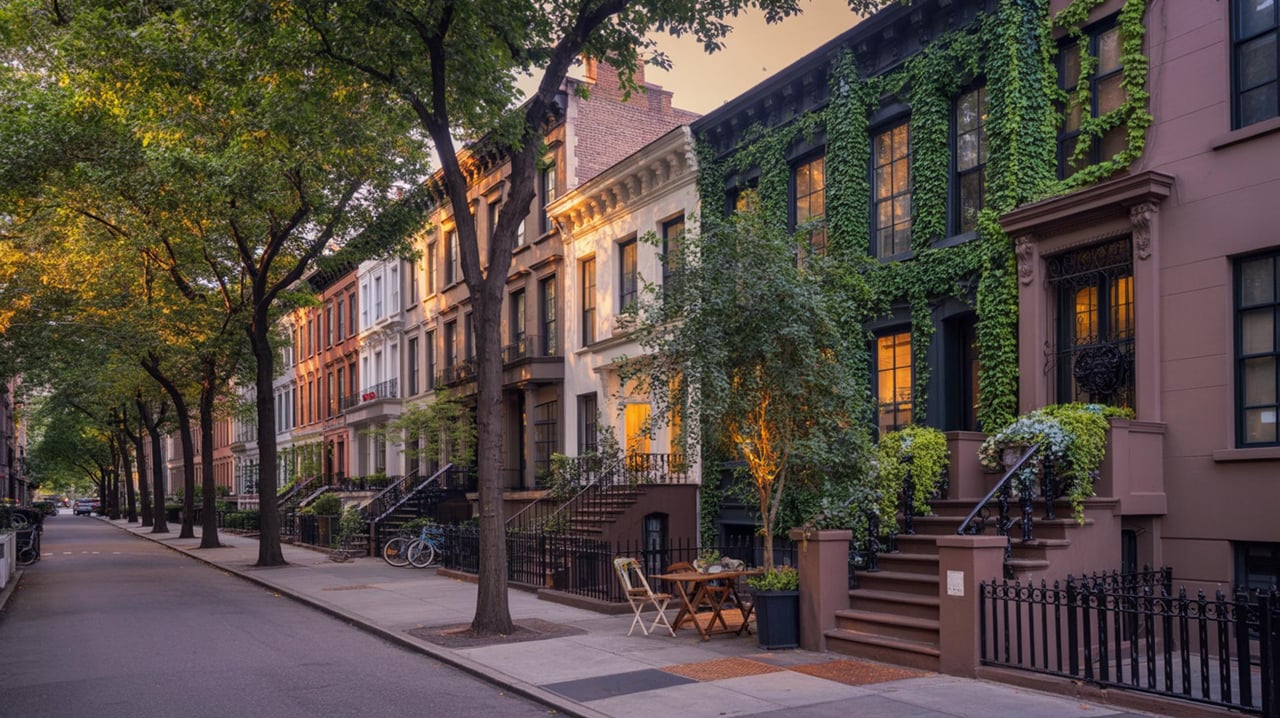
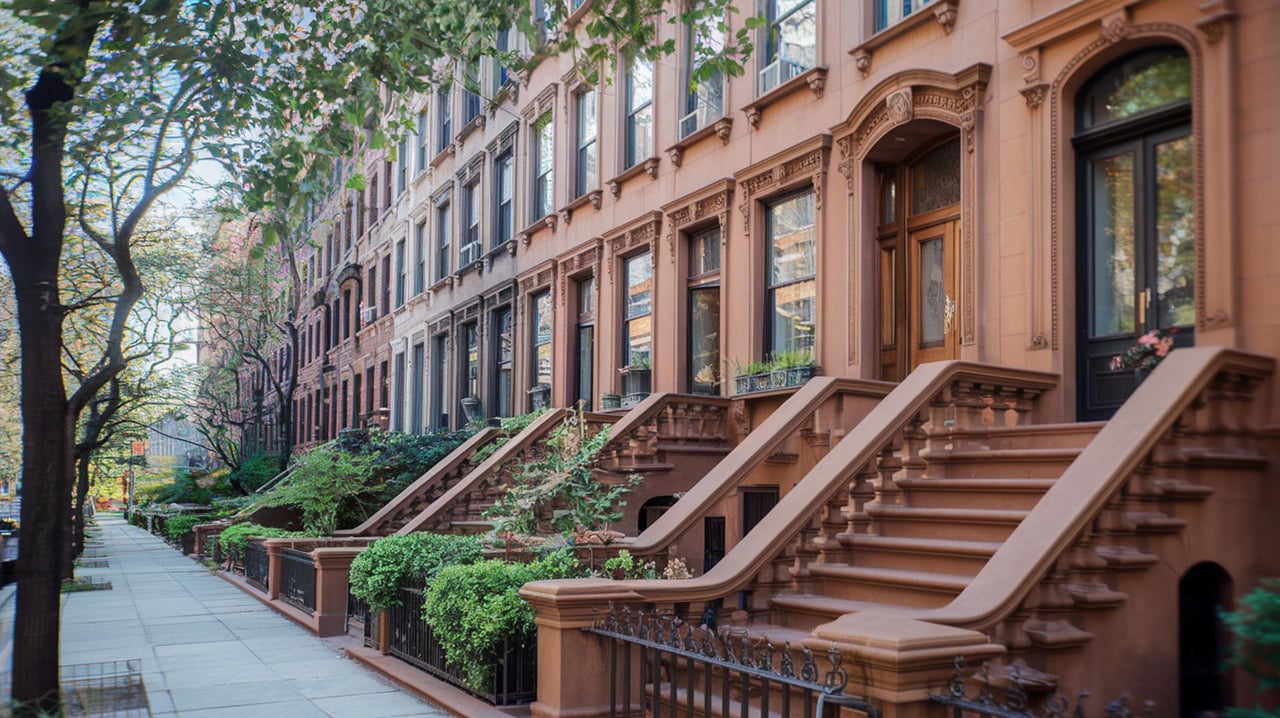
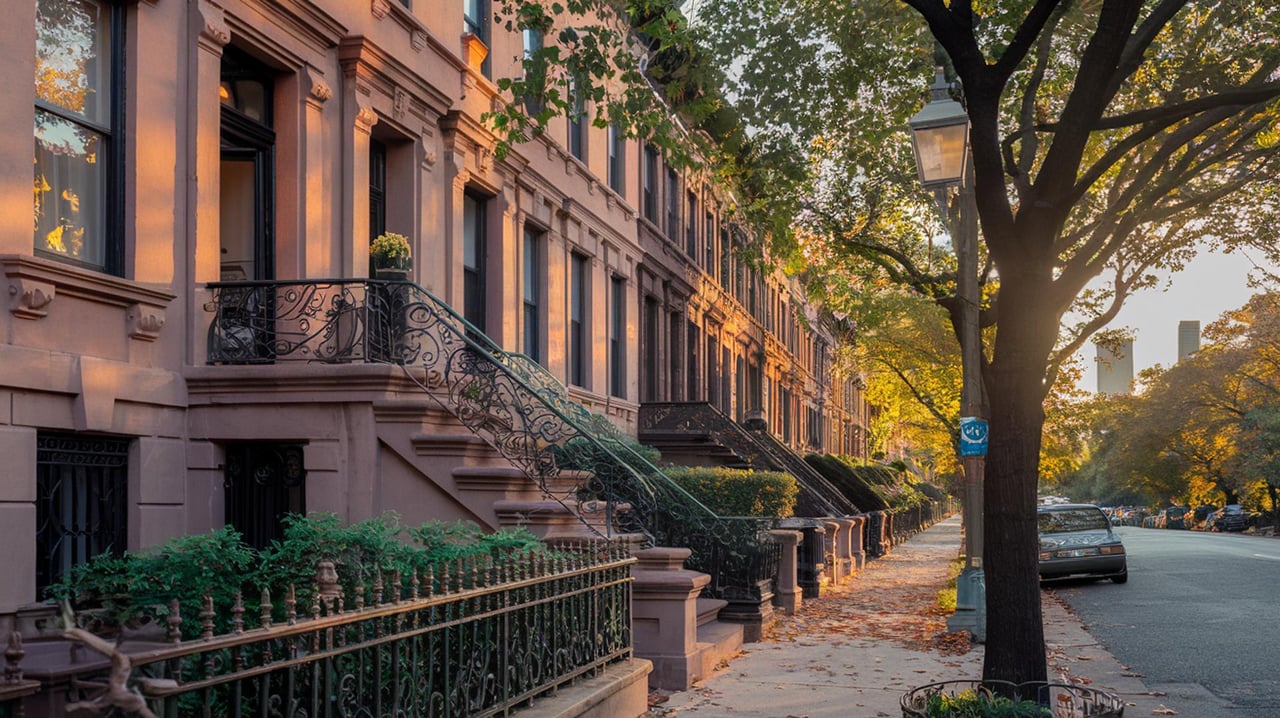
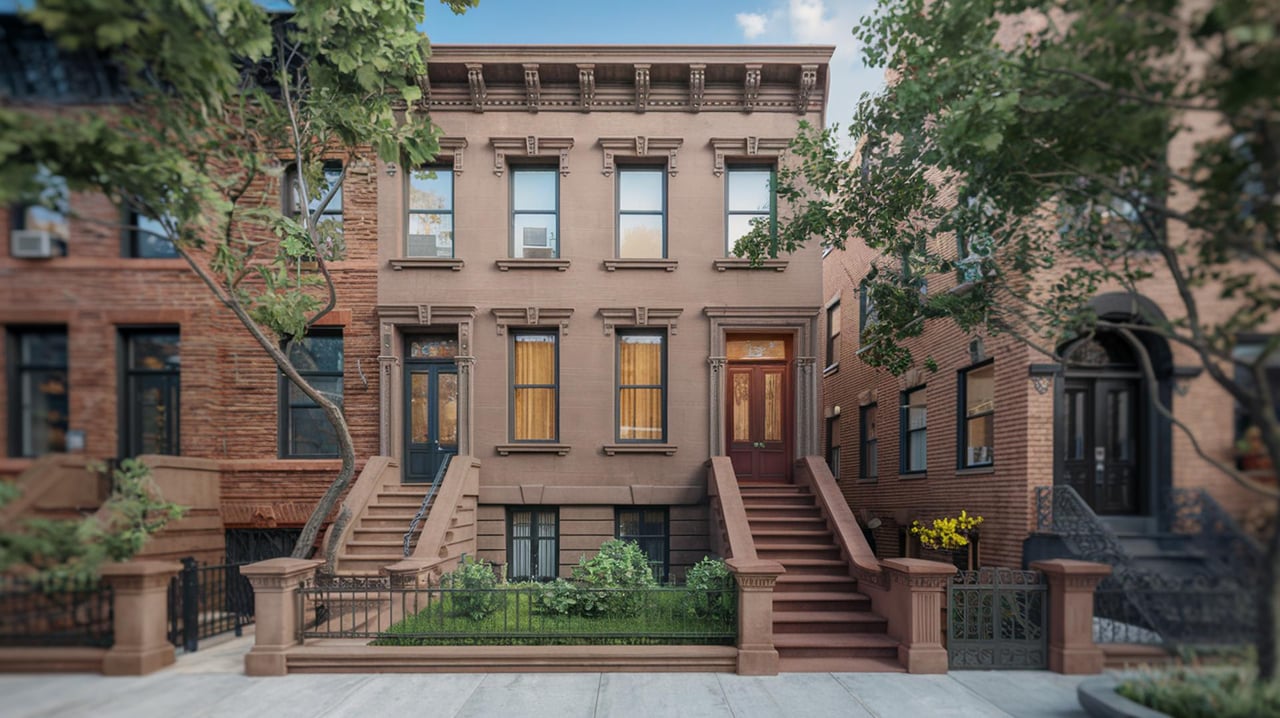
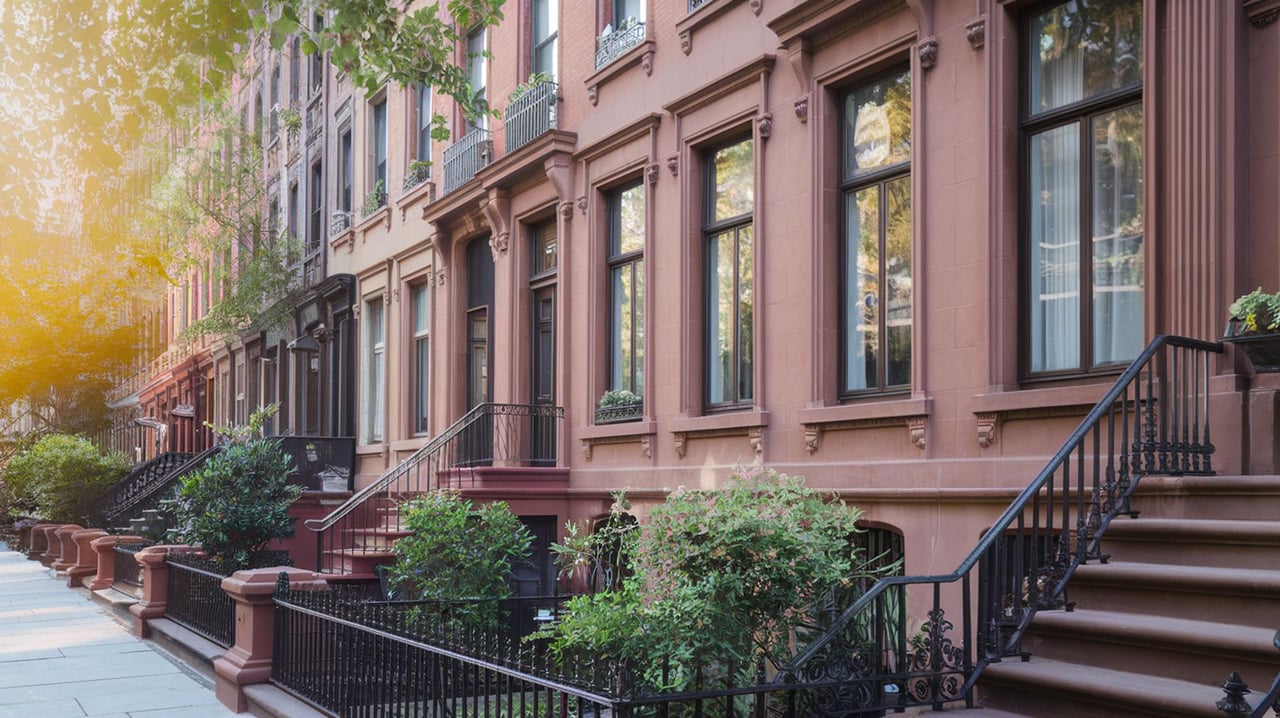
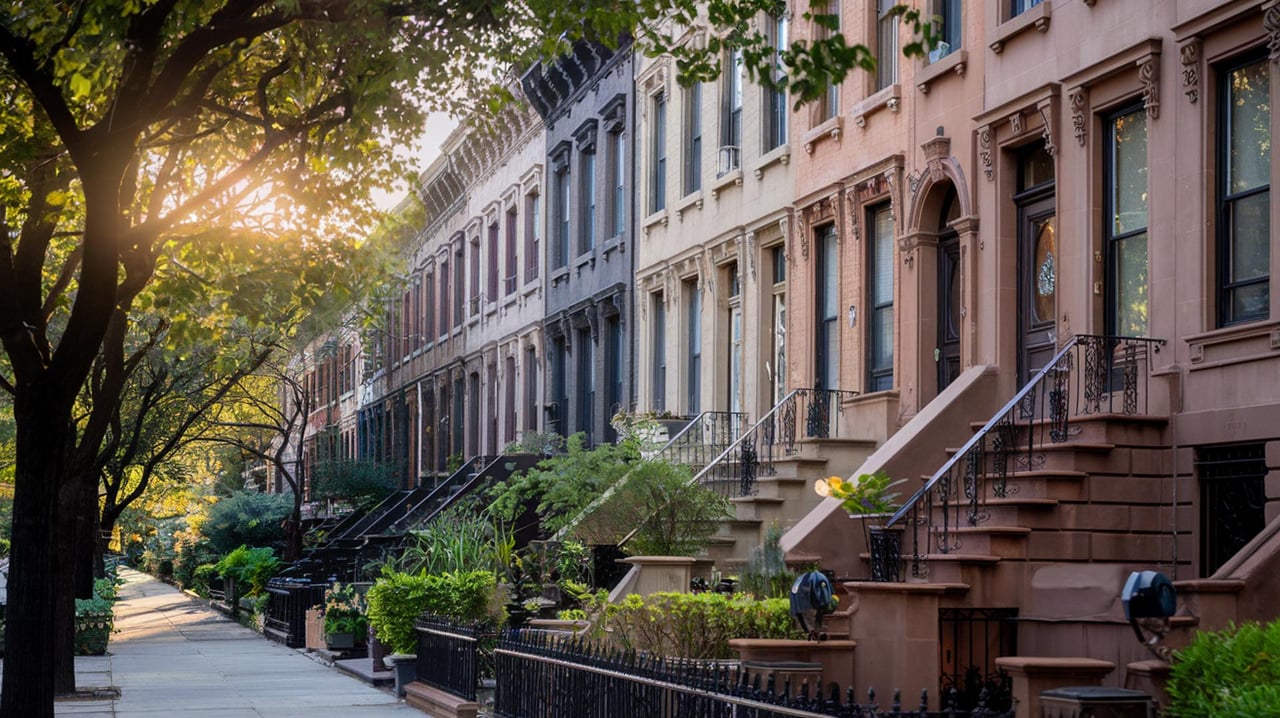
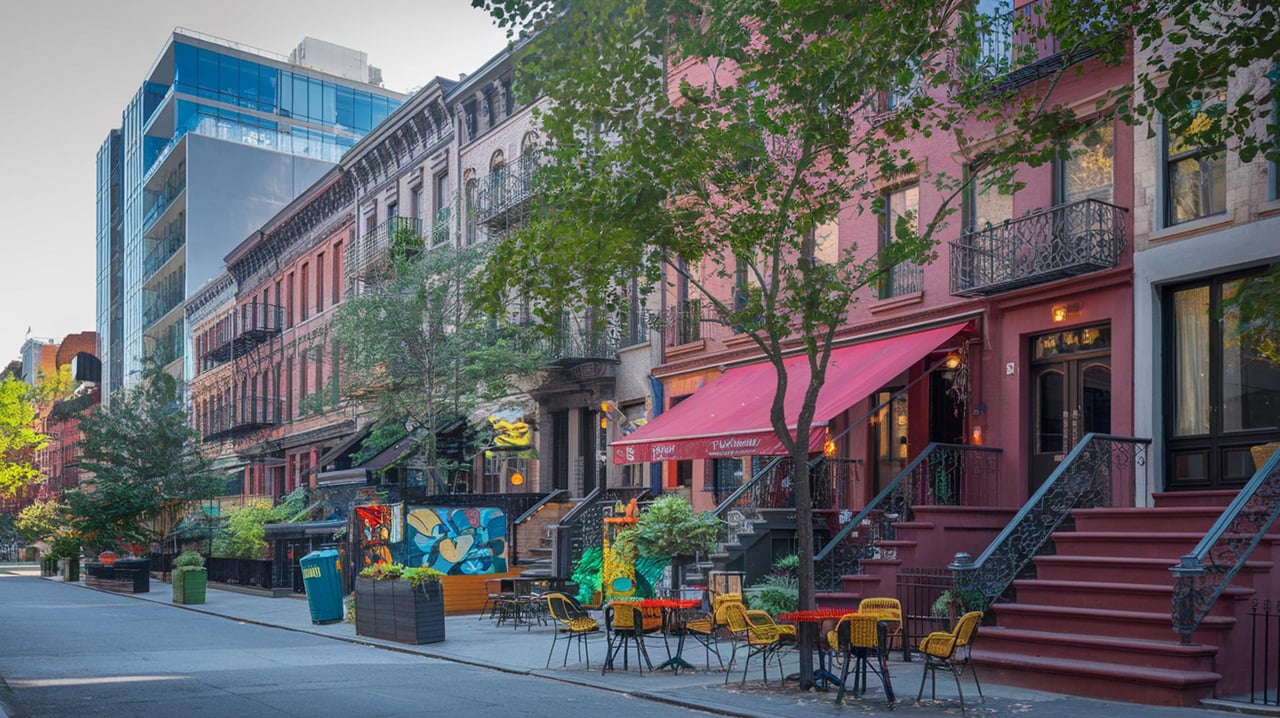
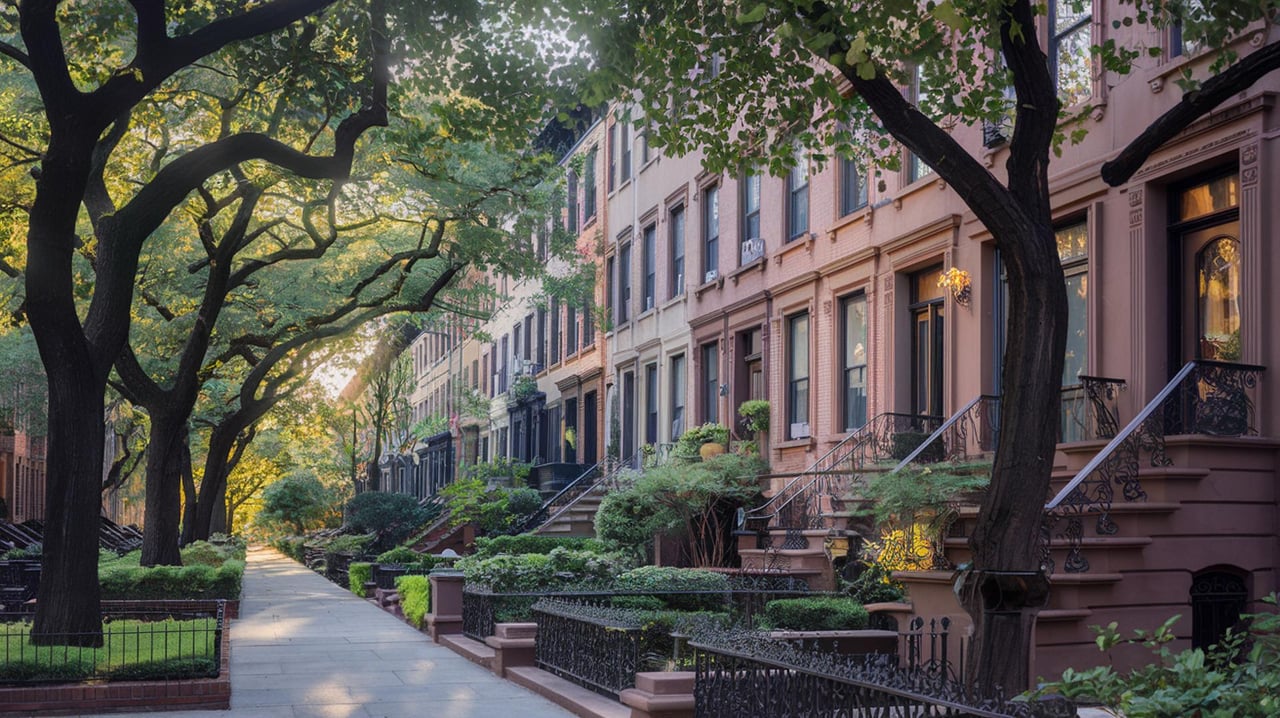
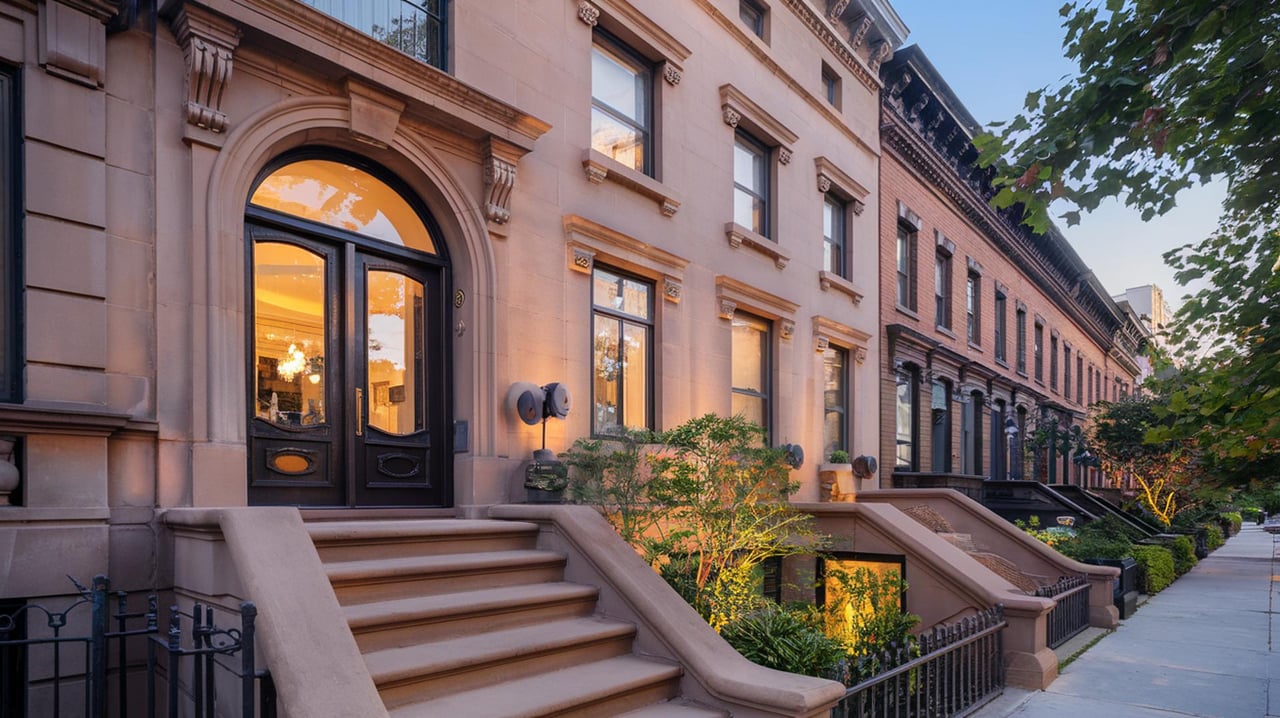
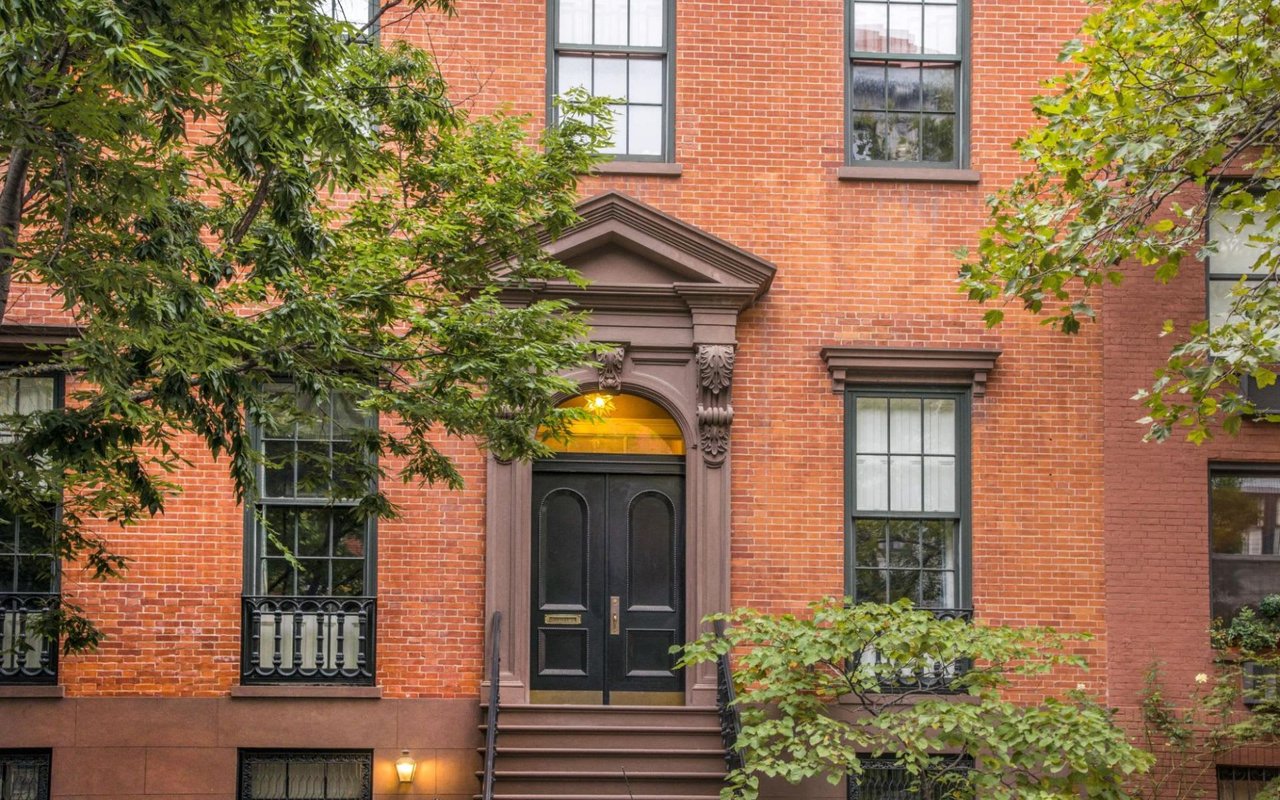
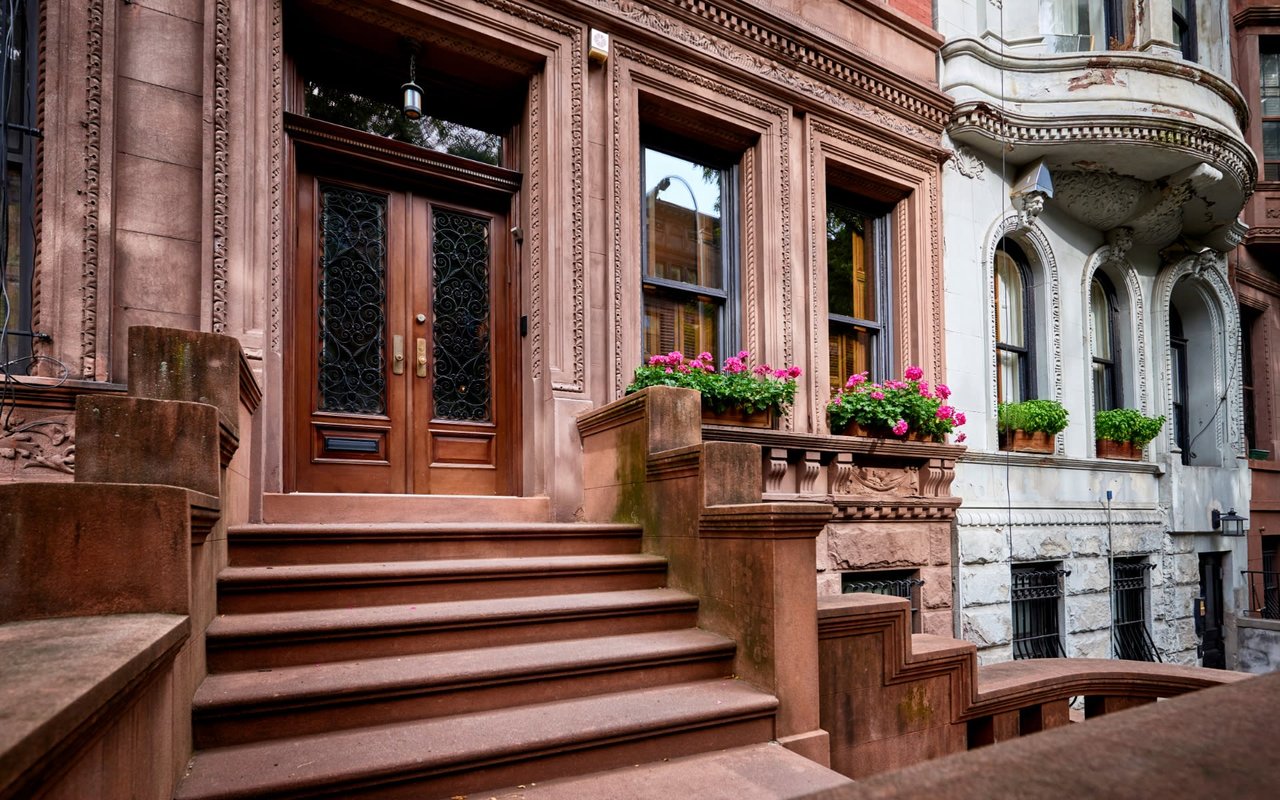
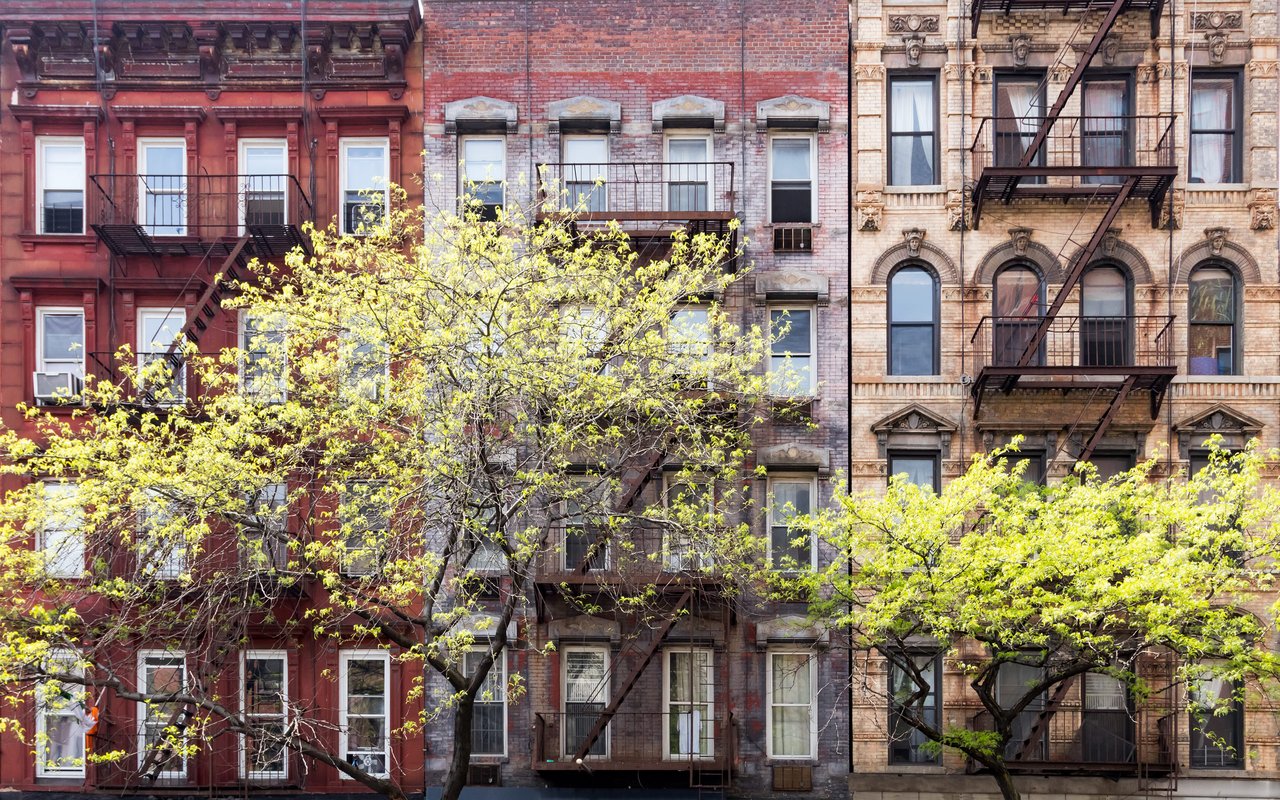
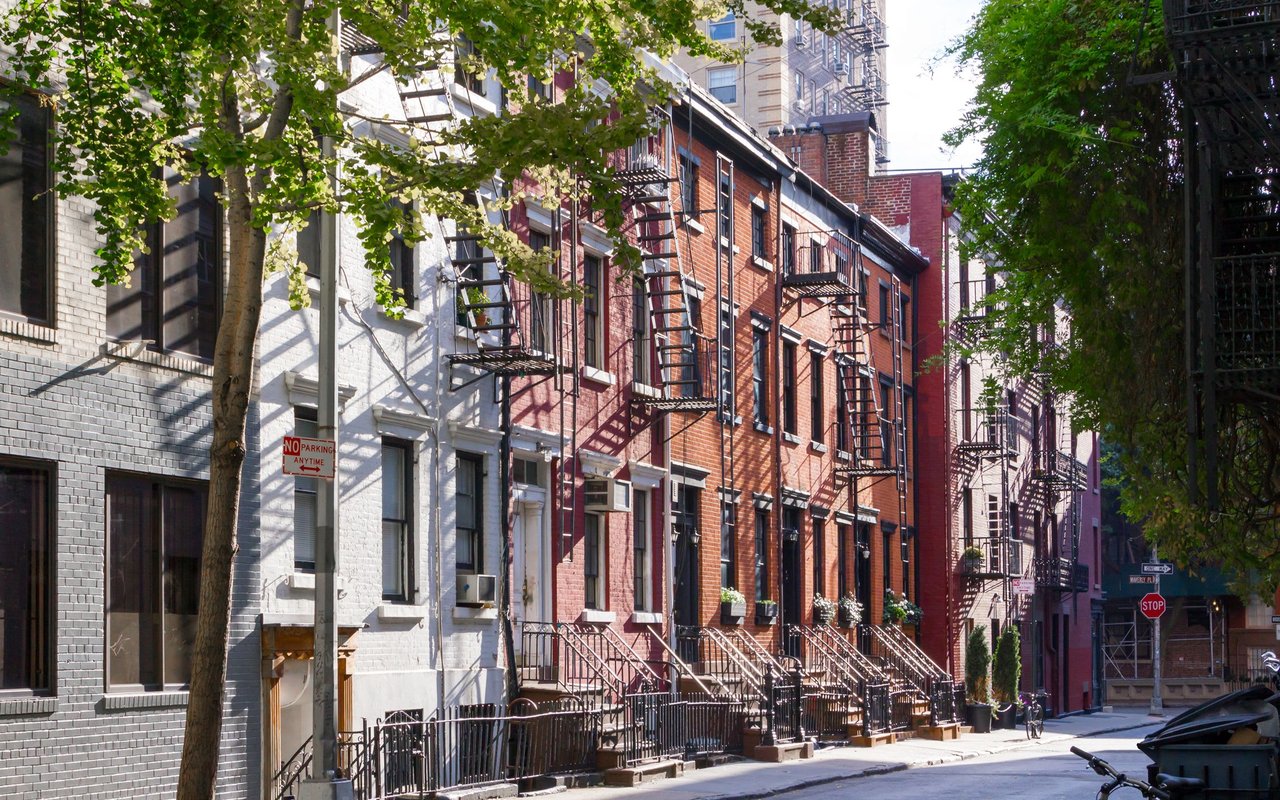
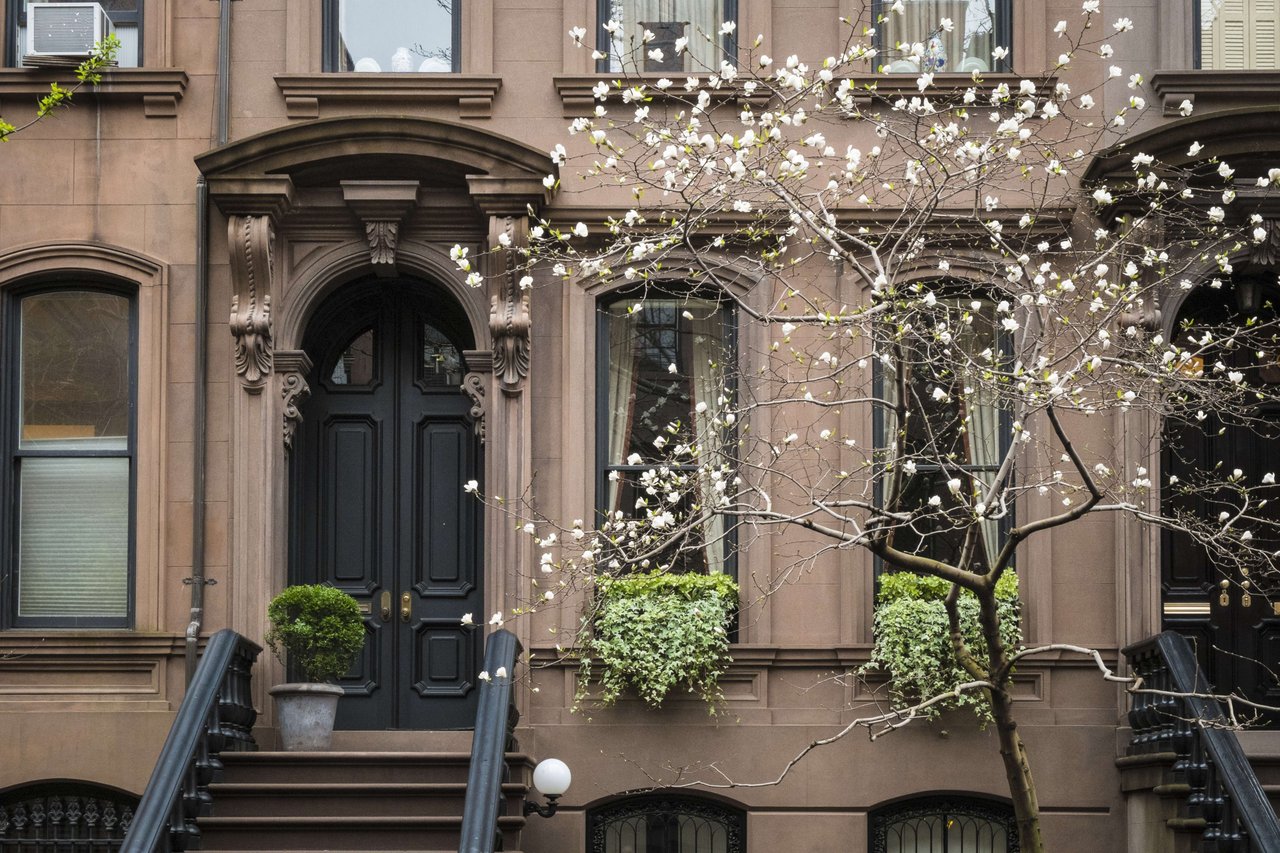
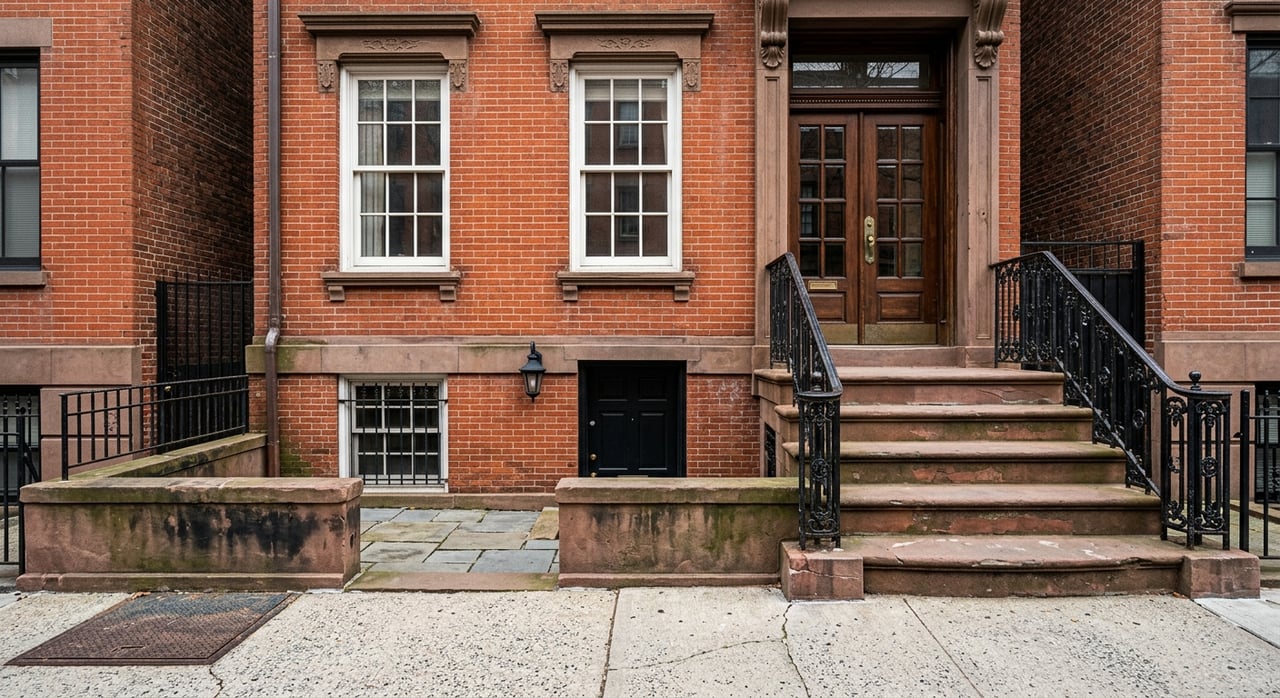
The everyday appeal of a Greenwich Village townhouse starts right at the sidewalk. The LPC Rowhouse Manual describes rowhouses as the dominant housing type in many of the city’s historic districts, and in Greenwich Village that usually means narrow brick or brownstone homes, often three to six stories tall, with stoops, cornices, and tightly spaced facades.
If you picture the classic Village block, a few details tend to define it:
- High stoops
- Raised or English basements
- Tall parlor-floor windows
- Recessed entry doors
- Iron railings
- Narrow front lots close to the sidewalk
These elements shape how the home feels before you even walk inside. A stoop gives you a small threshold between public and private life. A recessed doorway creates a sense of shelter. Parlor-floor windows bring scale and light to the main living level, while the narrow lot keeps the house closely connected to the street.
The charm is in the variation
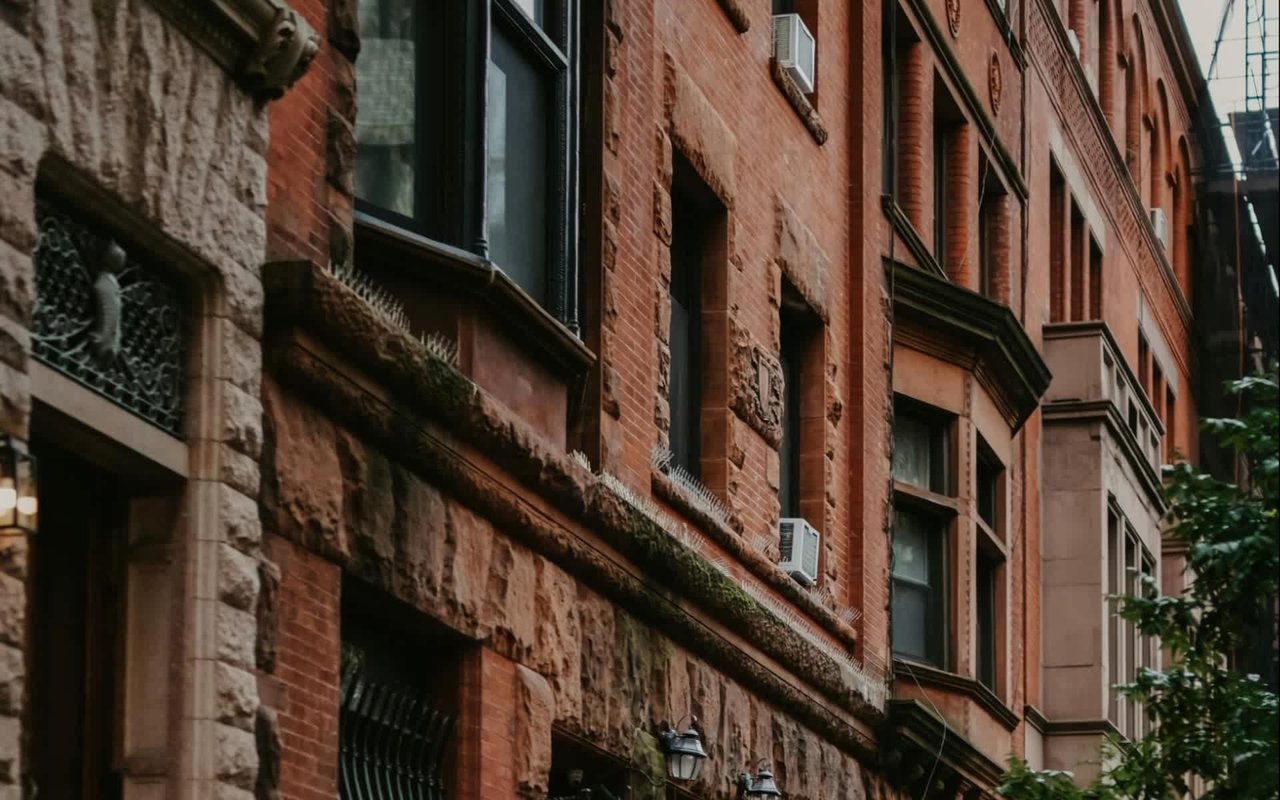
One of the most appealing parts of townhouse living in Greenwich Village is that the blocks feel cohesive without feeling repetitive. The district includes a wide mix of architectural styles, including Federal, Greek Revival, Italianate, French Second Empire, Neo-Grec, and Queen Anne, as noted by the Landmarks Preservation Commission.
That means your experience of the streetscape can shift subtly from block to block. On one street, you may notice a Greek Revival house with a prominent stoop and brownstone base. On another, a Federal row house with an English basement and deeply recessed entrance may set the tone. Elsewhere, a smaller Italianate home may stand out for its ironwork and parlor-floor emphasis.
The neighborhood’s environmental review materials point to examples like 354 West 11th Street, 131 Charles Street, and 81 Barrow Street, which help show how much visual range exists within the classic Village townhouse form. For you as a buyer, that variation can make the search more interesting, especially if you care about period detail, layout, and block identity.
Blocks that define the Village mood
When people talk about townhouse living in Greenwich Village, they are often responding to a specific kind of street atmosphere. The district map includes names that immediately set the scene, such as Washington Square North, West 10th Street, West 11th Street, Perry Street, Charles Street, Barrow Street, Grove Street, Bedford Street, and St. Luke’s Place.
These streets help explain why the neighborhood holds attention so well. Some blocks feel tucked away and almost residential-first, with consistent cornice lines and stoops creating a calm streetscape. Others sit closer to more active corridors and blend townhouse character with apartment buildings, retail activity, and institutional uses.
That is an important point. Greenwich Village is not only a rowhouse district. The neighborhood changes from block to block, and that variation is part of what makes it feel real rather than stage-set. If you are considering a townhouse here, the exact block matters just as much as the home itself.
Parks shape daily life
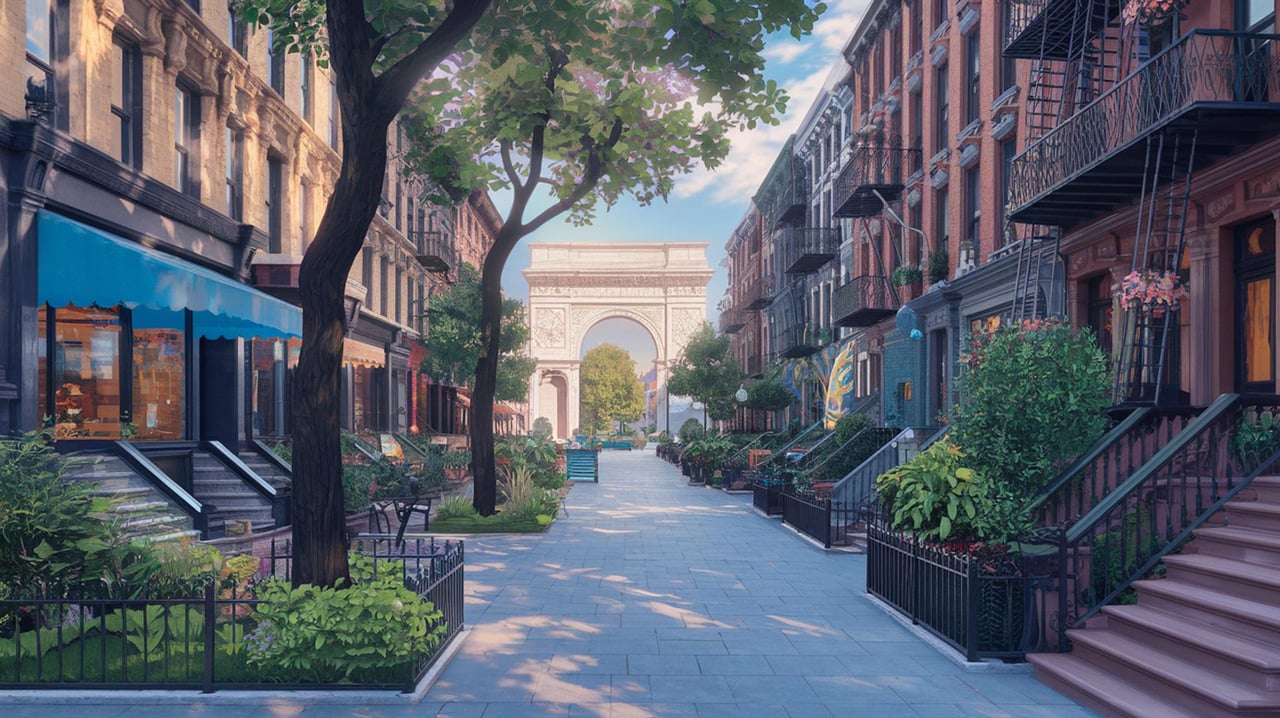
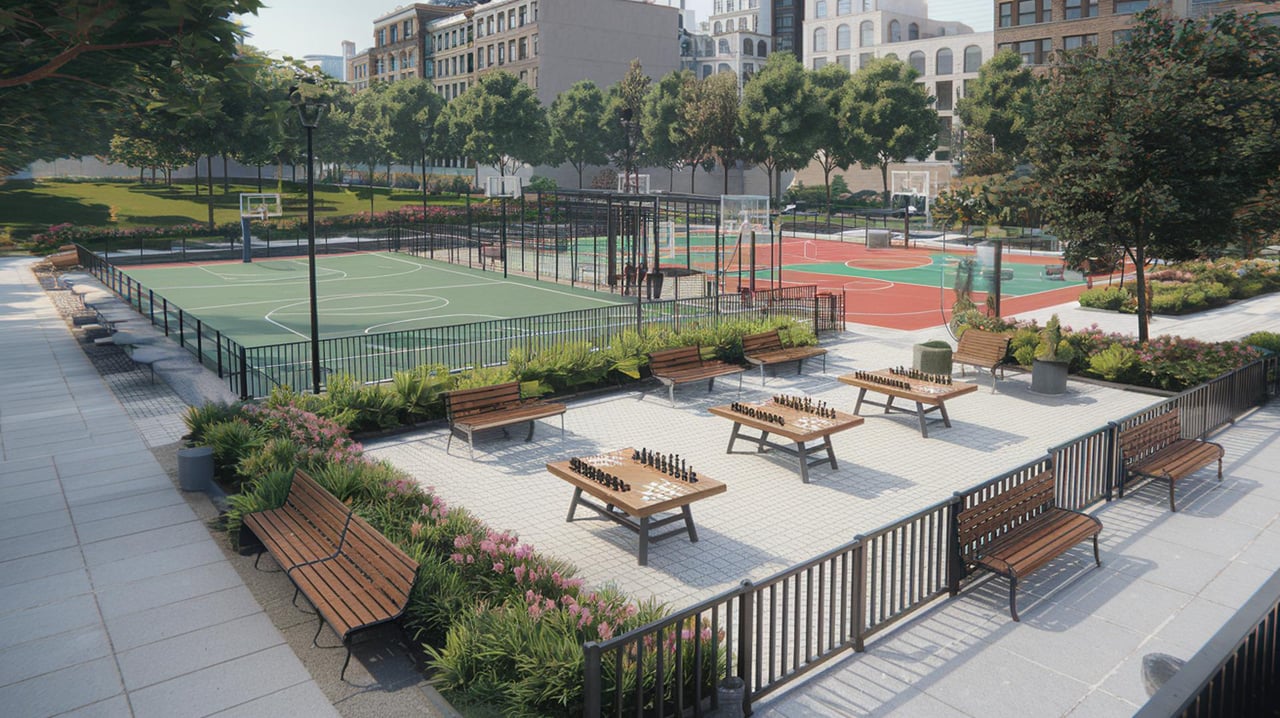
Townhouse living in Greenwich Village is not just about architecture. It is also about access to public space. Washington Square Park is the neighborhood’s central open-space reference point, spanning 9.75 acres and serving as a focal point for the surrounding community. The Washington Square Arch, built in 1889 to mark the centennial of George Washington’s inauguration, adds one of the neighborhood’s most recognizable landmarks.
Living near the park gives daily life a sense of place. You can move from a quieter townhouse block to one of Manhattan’s most iconic public spaces in minutes. That contrast between calm side streets and active public realm is one of the defining Village experiences.
The area also benefits from a network of smaller green spaces. Official planning inventories identify Abingdon Square, Christopher Park, Sheridan Square Viewing Garden, Jackson Square, Jefferson Market Gardens, and Minetta Triangle among the nearby open spaces that support walkability and neighborhood texture.
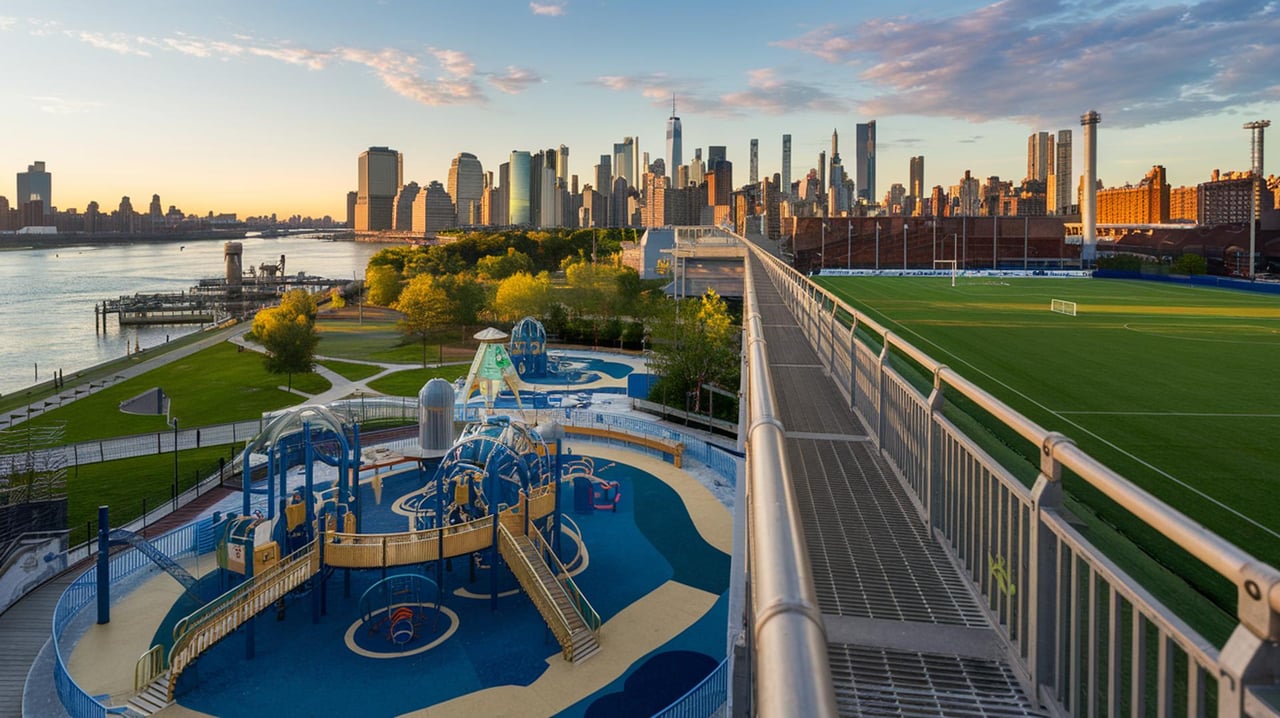
On the west side, Hudson River Park’s Greenwich Village section adds another layer. Running from Canal Street to Gansevoort Street, it offers an uninterrupted esplanade, river views, lawns, and access to Pier 40, the largest pier along the Hudson River. For townhouse owners, that means your daily routine can include both historic side streets and a large-scale waterfront park system.
What ownership means in a historic district
Owning on a historic Greenwich Village block comes with real benefits, but it also comes with responsibilities. The same preservation framework that helps maintain the neighborhood’s visual cohesion can affect what changes are possible and how they are reviewed.
The Landmarks Preservation Commission’s Certificate of Appropriateness process applies when proposed work affects protected architectural features or includes additions, demolitions, new construction, or the removal of elements such as stoops and cornices. Applications are processed through Portico and may require community board and Commission review.
In practical terms, that framework helps explain why many Village blocks continue to feel so consistent over time. Preservation review helps retain the low-rise scale, facade rhythm, and architectural details that define the neighborhood. For a buyer, it is worth understanding early, especially if you are considering a townhouse that may need updates, restoration, or a deeper renovation plan.
Why technical guidance matters
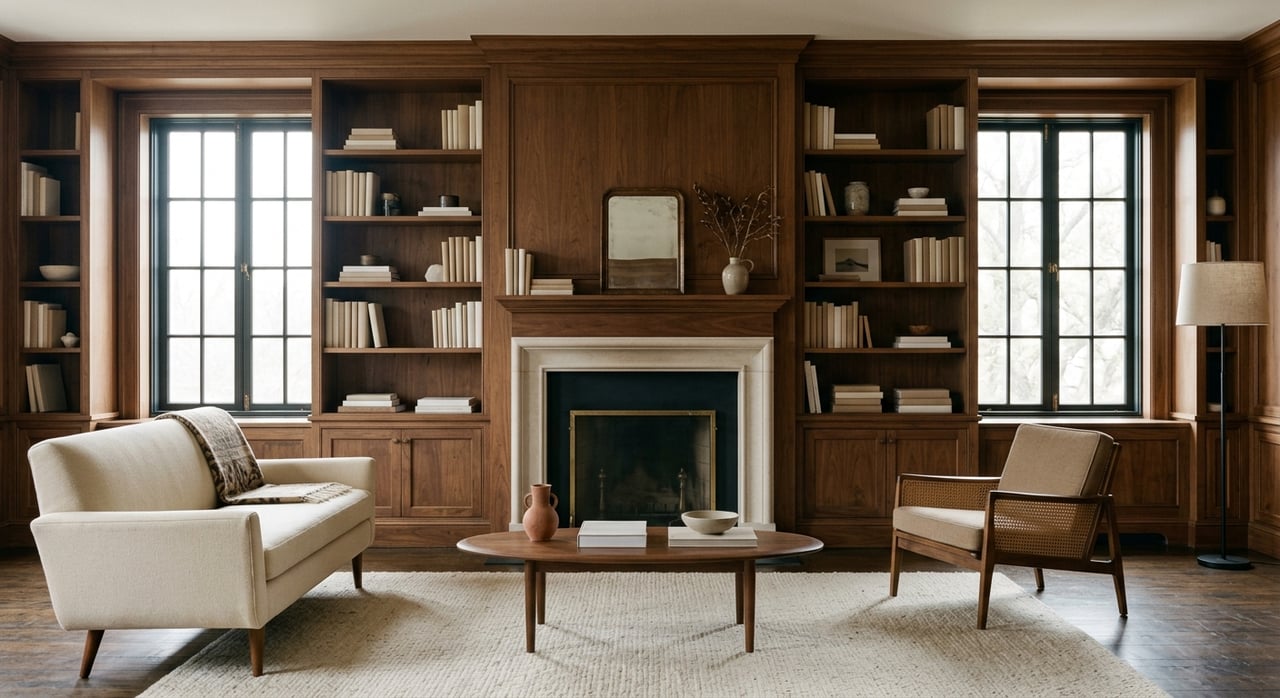
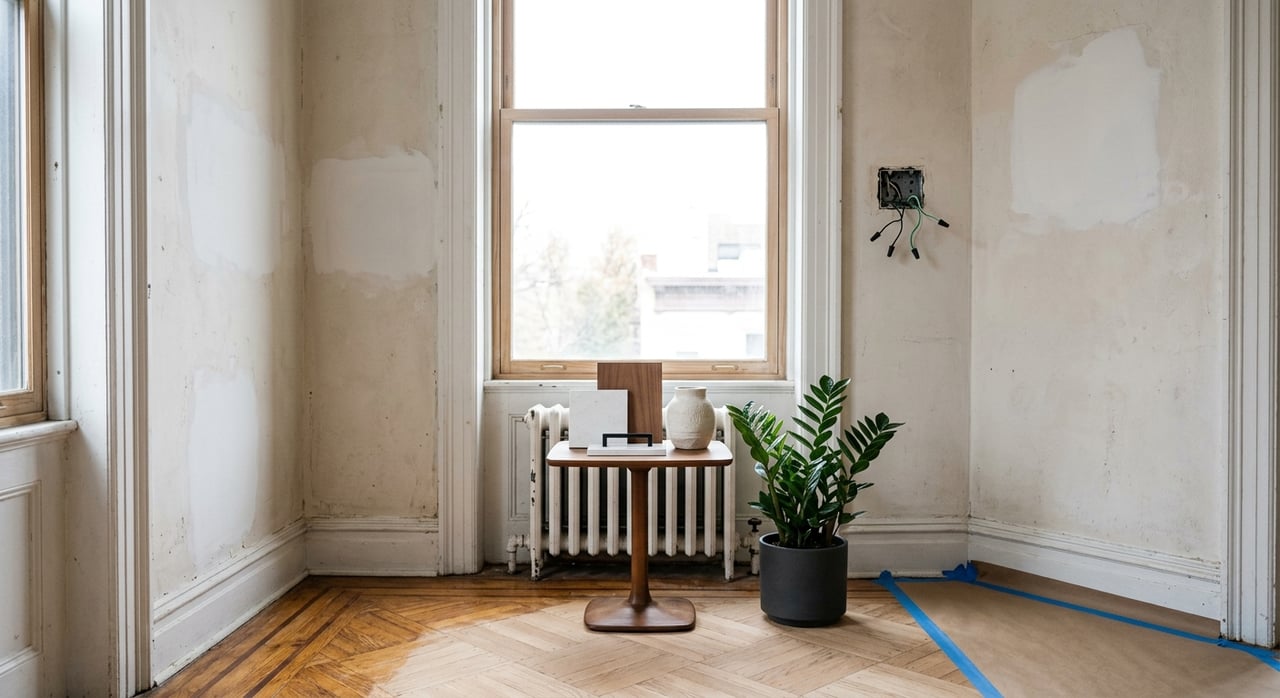
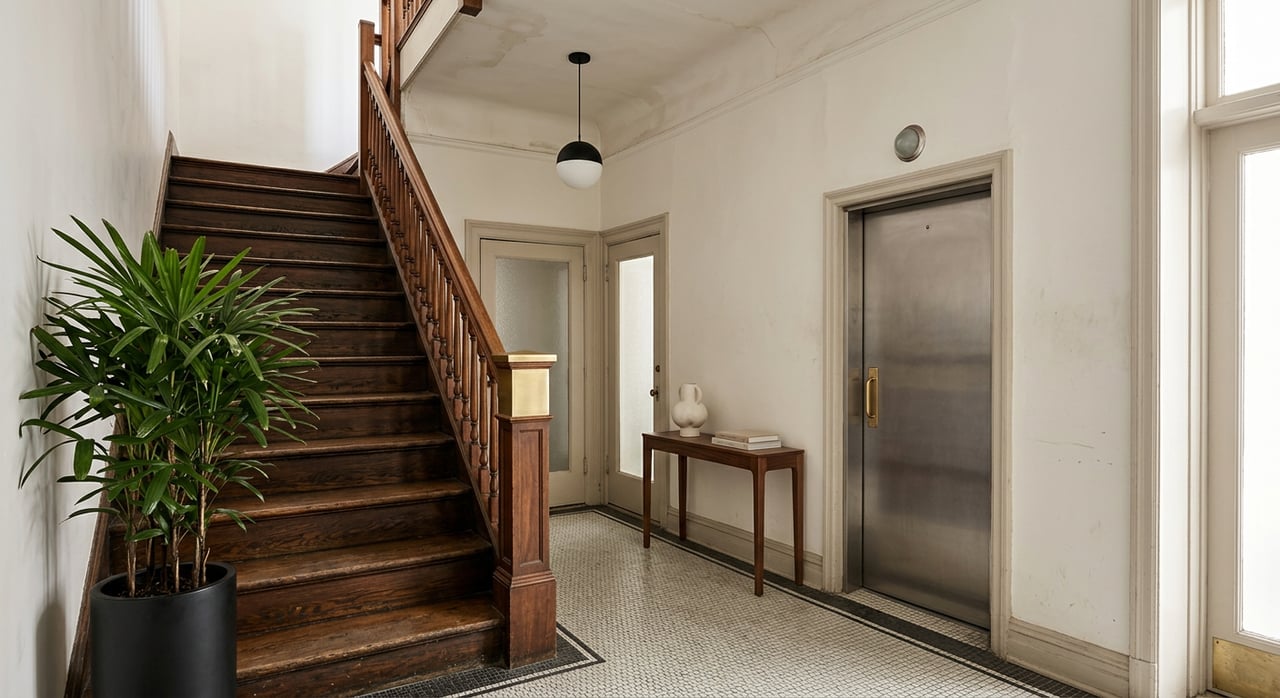
A Greenwich Village townhouse can be deeply rewarding, but it is rarely a simple asset. Historic character, age, layout, and district rules can all shape what ownership looks like. If you are buying with renovation in mind, you need clear guidance on feasibility, budgeting, and approvals, not just a tour of the prettiest blocks.
That is where a developer-broker perspective can be especially useful. With townhouse properties, the right advisor can help you think beyond finishes and square footage to understand how architecture, preservation, and project execution fit together. That kind of planning can make a major difference whether you want a move-in-ready home, a thoughtful restoration, or a value-add opportunity.
How to think about the right block
When you are exploring townhouse living in Greenwich Village, try to evaluate each block through a few practical lenses:
- Street character: Does the block feel primarily residential, mixed-use, or more connected to a busy edge?
- Architectural consistency: Are the stoops, cornices, and facade lines largely intact?
- Open-space access: How close are you to Washington Square Park, smaller local parks, or Hudson River Park?
- Renovation potential: If work is needed, what protected features may shape the scope?
- Daily rhythm: Does the block match how you actually want to live day to day?
Those questions can help you move past broad neighborhood labels. In Greenwich Village, the difference between one block and the next can meaningfully affect the living experience.
The lasting appeal of a Village townhouse
Townhouse living on a historic Greenwich Village block offers something increasingly rare in Manhattan: a home that feels tied to the street, the architecture, and the neighborhood’s long physical history. It is not just about owning a period property. It is about living in a place where the stoop, the cornice line, the block pattern, and the nearby park all contribute to daily life.
If you are considering buying, selling, restoring, or repositioning a townhouse in Greenwich Village, working with an advisor who understands both the market and the built form can help you make smarter decisions from the start. To talk through townhouse opportunities, restoration potential, or block-specific strategy, connect with Mark O’Brien Real Estate.
FAQs
What makes Greenwich Village townhouse living feel different from other Manhattan neighborhoods?
- Greenwich Village stands out for its irregular street pattern, large historic district, lower-rise streetscape, and strong concentration of rowhouses with stoops, cornices, and preserved facade details.
What architectural features define a Greenwich Village townhouse?
- Common features include high stoops, English or raised basements, tall parlor-floor windows, recessed entries, iron railings, narrow lots, and brick or brownstone facades.
What parks are near Greenwich Village townhouse blocks?
- Key open spaces include Washington Square Park, Abingdon Square, Christopher Park, Sheridan Square Viewing Garden, Jackson Square, Jefferson Market Gardens, Minetta Triangle, and the Greenwich Village section of Hudson River Park.
What should buyers know about renovating a Greenwich Village townhouse?
- If the property is within the historic district, changes to protected exterior features may require a Certificate of Appropriateness and review through the Landmarks Preservation Commission.
Why does the exact block matter when buying a Greenwich Village townhouse?
- Greenwich Village changes noticeably from block to block, with differences in street activity, building mix, architectural consistency, and access to parks shaping the overall living experience.